Your Ultimate Beginner Full Body Workout Plan
August 25, 2026 18 min read 3,641 words
Start your fitness transformation today with a simple, effective, and sustainable full-body routine designed for newcomers.
Start Your Journey
Why a Full Body Workout Plan is Perfect for Beginners
 Photo: Anastasia Shuraeva / Pexels
Embarking on a fitness journey can feel overwhelming, with a myriad of workout splits and training philosophies vying for your attention. However, for those just starting out, a beginner full body workout plan stands out as the most effective and sustainable approach. This method involves training all major muscle groups in a single session, typically 2-3 times per week, allowing ample time for recovery between workouts. The beauty of this approach lies in its efficiency and its ability to lay a robust foundation for future fitness endeavors.
One of the primary advantages of a full body routine for beginners is the frequency with which each muscle group is stimulated. Unlike split routines where a muscle group might only be trained once a week, a full body plan exposes muscles to training stimuli multiple times within the same week. This increased frequency is incredibly beneficial for neural adaptations—the process by which your brain learns to efficiently recruit muscle fibers. For novices, these neural adaptations occur rapidly, leading to significant strength gains even before substantial muscle hypertrophy (growth) takes place. This phenomenon is often referred to as 'newbie gains,' and a full body approach maximizes this initial period of rapid progress.
Furthermore, full body workouts heavily rely on compound movements. Compound exercises are those that involve multiple joints and muscle groups working together, such as squats, deadlifts, bench presses, and rows. These movements are incredibly functional, mimicking natural human movement patterns, and are highly effective for building overall strength, coordination, and athletic ability. By focusing on these fundamental movements, beginners develop a balanced physique and a strong core, which are essential for long-term fitness and injury prevention. Isolating individual muscles might seem appealing, but for a beginner, the biggest bang for your buck comes from mastering these complex, multi-joint exercises.
The time efficiency of a full body workout plan is another compelling factor. With busy schedules, finding time for multiple long gym sessions can be challenging. A full body routine allows you to achieve a comprehensive workout in 45-60 minutes, two or three times a week. This structure makes fitness more accessible and less daunting, increasing the likelihood of adherence and consistency—which are arguably the most crucial components of any successful fitness program. Instead of feeling like you need to dedicate hours every day, you can achieve significant results with focused, efficient sessions.
Moreover, a full body approach helps beginners understand their bodies better and identify any muscular imbalances early on. By consistently working all major muscle groups, you can quickly pinpoint areas of weakness or tightness, allowing you to address them before they become more significant issues. This holistic view of training promotes overall physical well-being and helps in developing a symmetrical and functional physique. For more advanced training techniques, exploring specific
strength training programs can be a natural next step once this foundation is built.
Finally, the recovery aspect of full body training is ideal for beginners. By training muscle groups multiple times a week but with adequate rest days in between, you allow your muscles sufficient time to repair and grow. Over-training is a common pitfall for enthusiastic beginners, leading to burnout, injury, and diminished results. A well-structured full body plan inherently bakes in the necessary recovery, ensuring sustainable progress and a positive training experience. It teaches the importance of rest as an integral part of the training process, not just an absence of activity.
Crafting Your Essential Beginner Full Body Workout Plan
 Photo: Mikhail Nilov / Pexels
Designing an effective beginner full body workout plan involves selecting the right exercises, determining appropriate sets and reps, and establishing a consistent schedule. The goal is to maximize muscle engagement across the entire body while ensuring proper form and preventing overexertion. This plan focuses on compound movements that recruit large muscle groups, providing the most benefit for your time and effort.
**Workout Frequency:** For beginners, 2-3 full body workouts per week are ideal. This allows for sufficient recovery between sessions (e.g., Monday, Wednesday, Friday), giving your muscles 48-72 hours to repair and grow. Consistency is key, so choose days you can realistically commit to.
**Exercise Selection:** Prioritize compound exercises that work multiple muscle groups simultaneously. Here’s a sample list of foundational exercises:
1. **Lower Body (Quadriceps, Hamstrings, Glutes):**
* **Goblet Squat:** Holds a dumbbell or kettlebell against your chest. This helps maintain an upright torso and teaches proper squat mechanics.
* **Dumbbell Romanian Deadlift (RDL):** Focuses on hamstring and glute development while teaching hip hinge movement. Use light weights to perfect form.
2. **Upper Body (Chest, Shoulders, Triceps):**
* **Push-ups (or Incline Push-ups):** Excellent for chest, shoulders, and triceps. If standard push-ups are too challenging, elevate your hands on a bench or wall.
* **Dumbbell Bench Press (or Floor Press):** Works the chest, shoulders, and triceps. Can be done on a bench or lying on the floor.
3. **Upper Body (Back, Biceps):**
* **Dumbbell Row:** Targets the back muscles (lats, rhomboids) and biceps. Use a bench or sturdy object for support.
* **Pull-ups (or Lat Pulldowns/Assisted Pull-ups):** A challenging but highly effective exercise for the back and biceps. If full pull-ups are not yet possible, use an assisted machine, resistance bands, or perform lat pulldowns.
4. **Core (Abs, Obliques):**
* **Plank:** Builds core stability and strength. Focus on maintaining a straight line from head to heels.
* **Bird-Dog:** Improves core stability and coordination, particularly targeting the deep core muscles.
**Sets and Reps:** For beginners, a good starting point is 2-3 sets of 8-12 repetitions for most exercises. For planks, aim for 2-3 sets holding for 20-45 seconds. The last few reps of each set should feel challenging, but you should always be able to maintain good form. If you can easily complete 12 reps, consider increasing the weight slightly for the next session.
**Warm-up:** Always start with a 5-10 minute dynamic warm-up. This could include light cardio (jogging in place, jumping jacks) followed by dynamic stretches like arm circles, leg swings, torso twists, and bodyweight squats. A proper warm-up increases blood flow to muscles, improves joint mobility, and prepares your body for the workout, significantly reducing the risk of injury.
**Cool-down:** Finish each workout with 5-10 minutes of static stretching, holding each stretch for 20-30 seconds. Focus on the muscles you worked, such as hamstrings, quadriceps, chest, and back. This helps improve flexibility and aids in recovery.
**Progression:** The key to continuous improvement is progressive overload. This means gradually increasing the demands on your muscles over time. For beginners, this can be achieved by:
* **Increasing weight:** Once you can comfortably perform 12 reps with good form for all sets, increase the weight slightly.
* **Increasing reps:** If you don't have heavier weights, try to perform more reps within the 8-12 rep range, or even push to 15 reps if form allows.
* **Increasing sets:** Add an extra set to an exercise once you've mastered the initial sets and reps.
* **Decreasing rest time:** Gradually shorten the rest periods between sets (e.g., from 90 seconds to 60 seconds) to increase intensity.
Remember, the most important aspect of this beginner full body workout plan is consistency and listening to your body. Don't be afraid to adjust weights or reps if an exercise feels too easy or too difficult. The goal is steady, sustainable progress, not immediate perfection.
Optimizing Your Beginner Full Body Workout for Maximum Results
 Photo: Natalie Bond / Pexels
Beyond just following a set plan, several factors play a crucial role in optimizing your beginner full body workout plan for maximum results. These elements, often overlooked, can significantly impact your progress, recovery, and overall enjoyment of your fitness journey. Integrating these strategies will not only enhance your physical gains but also foster a sustainable and healthy lifestyle.
**Prioritize Proper Form Over Weight:** This cannot be stressed enough. As a beginner, your primary focus should always be on mastering the correct form for each exercise. Lifting too heavy with poor form is a direct route to injury and ineffective muscle engagement. Start with lighter weights, or even just your body weight, and perform each movement slowly and deliberately. If you're unsure about your form, consider watching instructional videos, using mirrors, or even hiring a personal trainer for a few sessions to ensure you're executing exercises correctly. Good form ensures that the target muscles are actually doing the work, leading to more efficient strength and muscle development. It's a foundational skill that will serve you throughout your entire fitness career, allowing you to safely progress to heavier loads in the future. Remember, quality over quantity is paramount when you're just starting out.
**Embrace Progressive Overload:** While proper form is crucial, consistent progress requires progressive overload. This principle states that to continue making gains, you must gradually increase the demands placed on your muscles. For beginners, this might look like increasing the weight you lift, performing more repetitions with the same weight, adding an extra set, or even reducing rest times between sets. Don't try to increase everything at once; make small, incremental changes. For instance, if you successfully completed 3 sets of 10 squats with 20 lbs, next time try 3 sets of 11 reps, or increase the weight to 22.5 lbs while maintaining 10 reps. This systematic approach ensures your muscles are continually challenged, forcing them to adapt and grow stronger. Without progressive overload, your body will adapt to the current stimulus, and your progress will plateau. Learning to track your workouts, even with a simple notebook, can be incredibly helpful for monitoring and implementing progressive overload effectively.
**Nutrition is Your Fuel:** Your workout efforts will be severely limited without adequate and appropriate nutrition. Think of your body as a high-performance vehicle; it needs the right fuel to run optimally and repair itself. For muscle growth and recovery, ensure you're consuming enough protein, which is the building block of muscle tissue. Aim for roughly 0.7-1 gram of protein per pound of body weight. Carbohydrates are your primary energy source for workouts, so don't shy away from complex carbs like whole grains, fruits, and vegetables. Healthy fats are also vital for hormone production and overall health. Hydration is equally important; drink plenty of water throughout the day, especially before, during, and after your workouts. A balanced diet supports energy levels, aids in muscle repair, and contributes to overall well-being, making your efforts in the gym far more fruitful. For personalized dietary advice, consider consulting a registered dietitian or nutritionist who can tailor recommendations to your specific needs and goals.
**Prioritize Rest and Recovery:** Many beginners make the mistake of thinking that more training always equals more results. In reality, muscles grow and repair during rest, not during the workout itself. Overtraining can lead to fatigue, decreased performance, increased risk of injury, and even hormonal imbalances. Aim for 7-9 hours of quality sleep per night. During sleep, your body releases growth hormone and performs critical repair processes. Active recovery, such as light walks or gentle stretching on off-days, can also aid in blood flow and reduce muscle soreness. Incorporating rest days into your beginner full body workout plan is not a sign of weakness; it's a strategic component of effective training. Listen to your body; if you feel excessively sore or fatigued, it might be a sign you need an extra rest day. Consistency in rest is as important as consistency in training for long-term success in any
fitness routine.
**Stay Consistent and Patient:** Fitness is a journey, not a sprint. Results don't happen overnight, and there will be days when you feel less motivated or see slower progress. The most important factor for long-term success is consistency. Stick to your workout schedule, even on days when you don't feel 100%. Over time, these consistent efforts compound into significant results. Celebrate small victories, track your progress, and remind yourself of your 'why.' Patience is also key; muscle growth and strength gains take time. Don't compare your beginning to someone else's middle. Focus on your own progress and trust the process. Building a habit of regular exercise is a monumental achievement in itself, and the physical transformations will follow.
Common Beginner Full Body Workout Mistakes and How to Avoid Them
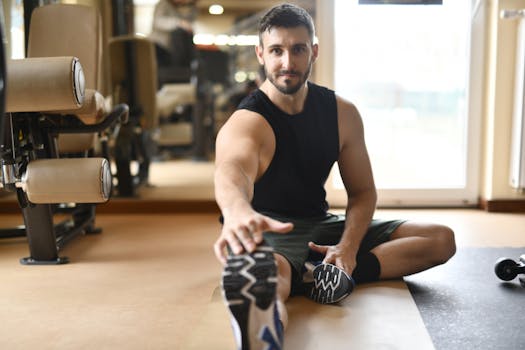 Photo: Andrea Piacquadio / Pexels
Embarking on a new fitness journey with a beginner full body workout plan is exciting, but it's also easy to fall into common traps that can hinder progress or even lead to injury. Being aware of these pitfalls and knowing how to avoid them will set you up for long-term success and a more enjoyable experience.
* **Mistake 1: Skipping the Warm-up and Cool-down.**
* **Why it's a mistake:** Jumping straight into intense exercises without preparing your body can lead to muscle strains, sprains, and reduced performance. Skipping the cool-down limits flexibility and can prolong muscle soreness.
* **How to avoid it:** Dedicate 5-10 minutes before each workout to dynamic stretches (e.g., arm circles, leg swings, torso twists) and light cardio. Conclude your session with 5-10 minutes of static stretching, holding each stretch for 20-30 seconds, focusing on the muscles you've worked.
* **Mistake 2: Prioritizing Weight Over Form.**
* **Why it's a mistake:** This is perhaps the most common and dangerous mistake. Lifting too heavy with improper form drastically increases the risk of injury and means the target muscles aren't being effectively worked. You might be compensating with other muscles, leading to imbalances.
* **How to avoid it:** Always start with light weights or just your body weight. Focus intently on executing each movement with perfect form. Watch instructional videos, use mirrors, or even record yourself to check your technique. Only increase the weight when you can comfortably perform all prescribed reps with excellent form.
* **Mistake 3: Not Tracking Progress.**
* **Why it's a mistake:** Without tracking, it's difficult to implement progressive overload, which is essential for continuous gains. You won't know if you're getting stronger or if your plan is effective, leading to demotivation.
* **How to avoid it:** Keep a workout journal or use a fitness app to log your exercises, sets, reps, and weights. This allows you to review your progress, identify plateaus, and strategically plan your next steps for increasing intensity.
* **Mistake 4: Inconsistent Schedule.**
* **Why it's a mistake:** Sporadic workouts make it difficult for your body to adapt and build strength. Consistency is the bedrock of any successful fitness plan, especially for beginners.
* **How to avoid it:** Schedule your 2-3 full body workouts per week in advance and treat them as non-negotiable appointments. Choose days and times that realistically fit into your routine. Even if you have to shorten a workout, showing up is half the battle.
* **Mistake 5: Neglecting Recovery (Sleep and Nutrition).**
* **Why it's a mistake:** Muscles grow and repair during rest, not during the workout. Insufficient sleep and poor nutrition will undermine all your hard work in the gym, leading to fatigue, poor performance, and slow results.
* **How to avoid it:** Aim for 7-9 hours of quality sleep each night. Prioritize a balanced diet rich in protein, complex carbohydrates, and healthy fats. Stay well-hydrated throughout the day. View rest and nutrition as integral parts of your training, not optional extras.
* **Mistake 6: Doing Too Much, Too Soon.**
* **Why it's a mistake:** Overenthusiasm can lead to overtraining, excessive soreness, burnout, and injury. Beginners are particularly susceptible to this as they are eager to see rapid results.
* **How to avoid it:** Start with the recommended 2-3 full body workouts per week and stick to the suggested sets and reps. Gradually increase intensity and volume over time. Listen to your body and don't be afraid to take an extra rest day if needed. Sustainable progress is always better than rapid burnout.
