The Best Home Workout Routines for Beginners: Your Ultimate Guide
best home workout routines for beginners

The Best Home Workout Routines for Beginners: Your Ultimate Guide

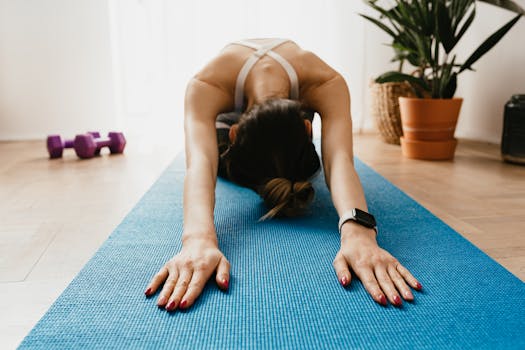
Full body faceless fit female wearing smartwatch stretching body in Child Pose on blue mat placed near plants and dumbbells in light living roomPhoto: www.kaboompics.com / Pexels

The Best Home Workout Routines for Beginners: Your Ultimate Guide

Unlock your fitness potential from the comfort of your home with our expertly designed, beginner-friendly workout plans.

Start Your Journey Now

Key Takeaways

  • ✓ You don't need expensive gym memberships or equipment to get fit.
  • ✓ Consistency is more important than intensity when starting out.
  • ✓ Proper form prevents injury and maximizes results.
  • ✓ Listen to your body and modify exercises as needed.

How It Works

1
Assess Your Current Fitness Level

Before diving in, understand your starting point. This helps you choose appropriate exercises and set realistic goals for your home workout journey.

2
Choose Your Routine & Schedule

Select a workout plan that aligns with your goals and available time. Consistency is key, so pick a schedule you can realistically stick to each week.

3
Master Basic Movements

Focus on learning proper form for foundational exercises. Correct technique ensures effectiveness and significantly reduces the risk of injury as you progress.

4
Progress Gradually & Stay Consistent

As you get stronger, gradually increase repetitions, sets, or introduce more challenging variations. Regularity will yield the best long-term fitness results.

Why Home Workouts Are Perfect for Fitness Beginners
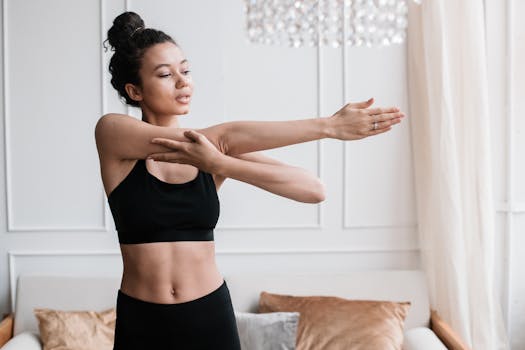
A young woman in activewear stretches indoors, embodying a healthy lifestyle.Photo: Pavel Danilyuk / Pexels
Embarking on a fitness journey can feel daunting, especially for beginners. The thought of stepping into a crowded gym, navigating unfamiliar equipment, or feeling self-conscious about your fitness level can be a significant barrier. This is precisely why home workouts have emerged as the ideal starting point for many. They offer an unparalleled level of convenience, allowing you to exercise on your own schedule, in an environment where you feel most comfortable. Imagine rolling out of bed and completing a workout before your day even truly begins, or squeezing in a quick session during a lunch break without the commute. This flexibility removes many common excuses that often derail initial fitness efforts. Beyond convenience, home workouts are incredibly cost-effective. You don't need a pricey gym membership, nor do you require a full suite of expensive equipment. Many effective beginner routines rely solely on your body weight, making fitness accessible to everyone, regardless of budget. As you progress, you might choose to invest in a few inexpensive items like resistance bands or a yoga mat, but these are optional additions rather than necessities from day one. This low financial barrier means you can commit to your fitness goals without the pressure of a recurring monthly fee. Furthermore, the privacy of your own home provides a judgment-free zone. For beginners who might feel intimidated by more experienced gym-goers, working out at home eliminates this anxiety. You can focus entirely on learning new movements, improving your form, and building confidence at your own pace. There's no pressure to perform or compare yourself to others, allowing for a more positive and sustainable introduction to physical activity. This personal space fosters a sense of empowerment, letting you celebrate small victories and overcome challenges without external scrutiny. It creates a safe haven where fitness becomes a personal journey of self-improvement, rather than a public performance. Finally, home workouts empower you with control over your environment. You can choose your music, adjust the temperature, and even take breaks whenever you need to, tailoring the experience exactly to your preferences. This level of personalization can significantly enhance your enjoyment and adherence to a fitness routine. It's about creating a space where you genuinely look forward to moving your body, rather than dreading a trip to the gym. For more tips on getting started, explore our guide on starting a fitness journey. Ultimately, home workouts break down the traditional barriers to entry for fitness. They provide a practical, affordable, and comfortable pathway for beginners to build strength, improve cardiovascular health, and cultivate lasting healthy habits. By embracing the simplicity and accessibility of working out at home, you're setting yourself up for a successful and enjoyable fitness transformation. This foundation of comfort and control is crucial for maintaining motivation and making exercise a consistent part of your lifestyle, ensuring that your initial enthusiasm translates into long-term commitment and visible results. It’s about making fitness work for you, on your terms, and in your space.

Building a Foundation: Essential Bodyweight Exercises for Beginners
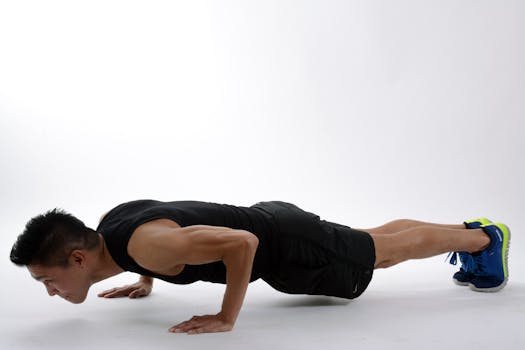
Young man in athletic wear doing push-ups, showcasing strength and fitness.Photo: Keiji Yoshiki / Pexels
The cornerstone of any effective beginner home workout routine lies in mastering fundamental bodyweight exercises. These movements are incredibly versatile, require no equipment, and efficiently target multiple muscle groups, providing a full-body workout. Before you even think about adding weights or complex routines, it’s crucial to perfect your form on these foundational exercises. Proper technique not only prevents injury but also ensures you're activating the correct muscles, maximizing the effectiveness of each repetition. Let's start with the Squat, often called the king of lower body exercises. It primarily works your glutes, hamstrings, and quadriceps. To perform a perfect squat, stand with your feet shoulder-width apart, toes pointing slightly outward. Keep your chest up and core engaged. Imagine sitting back into a chair, lowering your hips until your thighs are parallel to the floor (or as low as comfortable without pain). Ensure your knees don't cave inward and track over your toes. Push through your heels to return to the starting position. Next, the Push-Up is a fantastic upper body exercise that targets your chest, shoulders, and triceps, while also engaging your core. For beginners, start with knee push-ups or incline push-ups (hands on a counter or wall) to build strength. From a plank position, lower your chest towards the floor, keeping your body in a straight line from head to heels (or knees). Push back up to the starting position. Focus on controlled movements rather than speed. Lunges are another excellent lower body exercise, focusing on one leg at a time, which helps improve balance and addresses muscular imbalances. Step forward with one leg, lowering your hips until both knees are bent at approximately a 90-degree angle. Ensure your front knee is directly above your ankle and your back knee hovers just above the floor. Push off your front foot to return to the starting position, then alternate legs. For your core, the Plank is indispensable. It strengthens your entire core, including your abdominals, obliques, and lower back. Start in a push-up position, then lower onto your forearms. Keep your body in a straight line from head to heels, engaging your core and glutes. Avoid letting your hips sag or rise too high. Hold this position for as long as you can maintain good form, gradually increasing your hold time. Finally, don't forget the Glute Bridge for posterior chain strength. Lie on your back with knees bent, feet flat on the floor close to your glutes. Drive through your heels, lifting your hips off the floor until your body forms a straight line from your shoulders to your knees. Squeeze your glutes at the top, then slowly lower back down. Incorporating these fundamental bodyweight exercises into your routine will lay a strong foundation for future fitness progression. Start with 2-3 sets of 8-12 repetitions for each exercise (or a 30-60 second hold for planks), focusing intently on slow, controlled movements and perfect form. As you get stronger, you can increase reps, sets, or the duration of your holds. Remember, consistency and correct form are far more important than the number of reps you complete. These exercises are your building blocks; master them, and you'll be well on your way to a stronger, fitter you.

Sample Beginner Home Workout Routines: Your Weekly Plan
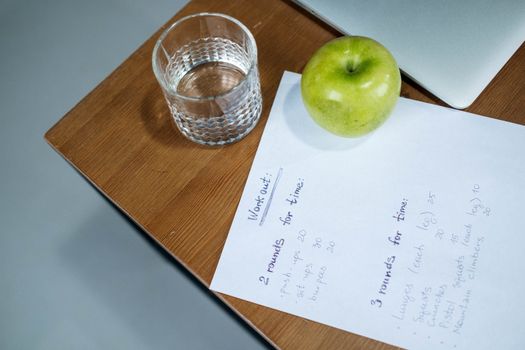
A green apple, glass of water, and workout plan on a wooden desk symbolize healthy living.Photo: Ron Lach / Pexels
Designing an effective home workout routine as a beginner doesn't have to be complicated. The key is to create a balanced plan that targets all major muscle groups, allows for adequate rest and recovery, and fits seamlessly into your schedule. For most beginners, aiming for 3-4 workout days per week, with rest days in between, is an excellent starting point. This frequency provides enough stimulus for muscle adaptation and strength gains without overtraining. Each workout session should ideally last between 20-45 minutes, including a warm-up and cool-down. Let's outline a couple of sample routines you can adapt. **Routine 1: Full-Body Focus (3 Days/Week)** This routine is perfect for maximizing efficiency and ensuring you hit every major muscle group multiple times a week. * **Warm-up (5 minutes):** Light cardio like marching in place, arm circles, leg swings, torso twists. * **Workout (25-35 minutes):** * Squats: 3 sets of 10-15 reps * Push-ups (on knees or incline): 3 sets of 8-12 reps * Lunges (alternating legs): 3 sets of 8-12 reps per leg * Plank: 3 sets, hold for 30-60 seconds * Glute Bridges: 3 sets of 12-15 reps * Bird-Dog: 3 sets of 10-12 reps per side (improves core stability and balance) * **Cool-down (5 minutes):** Gentle stretching of major muscle groups (hamstrings, quads, chest, triceps). **Routine 2: Upper/Lower Split (4 Days/Week)** If you prefer to dedicate more focus to specific muscle groups or have more time, an upper/lower split can be beneficial. * **Day 1: Lower Body & Core** * Warm-up (5 mins) * Squats: 3 sets of 12-15 reps * Lunges (alternating): 3 sets of 10-12 reps per leg * Glute Bridges: 3 sets of 15-20 reps * Calf Raises (standing or seated): 3 sets of 15-20 reps * Plank: 3 sets, hold 45-60 seconds * Side Plank: 2 sets, hold 30-45 seconds per side * Cool-down (5 mins) * **Day 2: Upper Body** * Warm-up (5 mins) * Push-ups (modified as needed): 3 sets of 8-12 reps * Wall Push-ups or Incline Push-ups (if regular push-ups are too challenging): 3 sets of 12-15 reps * Triceps Dips (using a sturdy chair): 3 sets of 10-15 reps * Pike Push-ups (for shoulders, hands on floor, hips elevated): 3 sets of 8-12 reps * Superman (for back): 3 sets of 12-15 reps * Cool-down (5 mins) * **Day 3: Rest or Active Recovery** (e.g., light walk, gentle yoga) * **Day 4: Repeat Day 1 (Lower Body & Core)** * **Day 5: Rest or Active Recovery** * **Day 6: Repeat Day 2 (Upper Body)** * **Day 7: Rest** Remember to listen to your body. If an exercise causes pain, stop and modify it or try an alternative. Over time, as you get stronger, you can increase the number of sets or repetitions, or introduce more challenging variations of these exercises. For example, instead of regular squats, you might try jump squats (if your joints allow) or add resistance bands. The key is progressive overload – gradually increasing the demand on your muscles – to continue seeing results. Consistency is paramount; even short, regular workouts are more effective than sporadic intense sessions. For additional guidance on progression, consider exploring resources on progressive overload for beginners. Hydration and nutrition also play a critical role in your progress. Ensure you're drinking plenty of water throughout the day and fueling your body with nutrient-dense foods. These routines are designed to be a starting point; feel free to adjust them to fit your personal fitness level and preferences. The most effective routine is the one you can stick with consistently.

Tips for Success and Common Beginner Mistakes to Avoid

A young woman in activewear stretches indoors, embodying a healthy lifestyle.Photo: Pavel Danilyuk / Pexels
Starting any new fitness regimen comes with its challenges and learning curves. To ensure your home workout journey as a beginner is both effective and sustainable, it's crucial to adopt smart strategies and proactively avoid common pitfalls. These tips will help you build solid habits and maintain motivation, turning your initial effort into a long-term lifestyle change. **Tips for Success:** * **Set Realistic Goals:** Don't aim to transform your body in a week. Focus on small, achievable goals like completing three workouts a week or holding a plank for 30 seconds. Celebrate these small victories to build momentum. * **Prioritize Proper Form:** This cannot be stressed enough. Watching instructional videos, using a mirror, or even recording yourself can help you check your form. Incorrect form can lead to injury and negate the benefits of the exercise. * **Create a Dedicated Workout Space:** Even if it's just a small corner of a room, having a designated area can help you get into a routine and mentally prepare for your workout. * **Schedule Your Workouts:** Treat your workout appointments like any other important commitment. Put them in your calendar and stick to them. Consistency is the most powerful tool for progress. * **Stay Hydrated and Fuel Your Body:** Drink plenty of water throughout the day, especially before, during, and after your workouts. Ensure your diet supports your activity level with balanced nutrition. * **Listen to Your Body:** It's okay to feel some muscle soreness (DOMS - Delayed Onset Muscle Soreness), but sharp pain is a warning sign. Don't push through pain. Modify or rest. * **Track Your Progress:** Keep a simple log of your workouts – exercises, sets, reps, and duration. Seeing your improvements over time is a huge motivator. * **Incorporate Active Recovery:** On rest days, engage in light activities like walking, gentle stretching, or yoga to aid recovery and keep your body moving. **Common Beginner Mistakes to Avoid:** * **Doing Too Much, Too Soon:** Over-exertion can lead to burnout, injury, and discouragement. Start slow, master the basics, and gradually increase intensity or volume. * **Neglecting Warm-ups and Cool-downs:** Skipping these crucial phases increases your risk of injury and hinders recovery. They prepare your body for activity and help it wind down afterwards. * **Comparing Yourself to Others:** Everyone's fitness journey is unique. Focus on your own progress and celebrate your personal achievements, rather than getting discouraged by what others are doing. * **Lack of Consistency:** Sporadic workouts yield sporadic results. Regularity, even if it's shorter sessions, is far more effective than occasional intense efforts. * **Ignoring Nutrition and Sleep:** Exercise is only one piece of the puzzle. A healthy diet and adequate sleep are fundamental for recovery, energy, and overall progress. * **Not Modifying Exercises:** If an exercise is too difficult, don't skip it; modify it. For example, do knee push-ups instead of full push-ups. This allows you to build strength safely. * **Getting Discouraged by Plateaus:** Progress isn't always linear. If you hit a plateau, it's normal. Re-evaluate your routine, consider different exercise variations, or slightly increase your intensity. By keeping these tips in mind and actively avoiding these common mistakes, you'll set yourself up for a successful and rewarding home fitness journey. Remember that fitness is a marathon, not a sprint. Patience, persistence, and a positive mindset are your greatest assets.

Comparison

FeatureBodyweight Only RoutineResistance Band RoutineDumbbell & Bodyweight Routine
Equipment NeededNoneResistance BandsLight Dumbbells, Mat
CostFree$15-$40$50-$100
Variety of ExercisesGoodVery GoodExcellent
PortabilityExcellentExcellentGood
Progression PotentialModerateGoodExcellent
Beginner Friendliness
Space RequiredMinimalMinimalModerate
Muscle IsolationLimitedGoodVery Good

What Our Readers Say

5 ★★★★★

"This guide completely changed my perspective on working out at home. The beginner routines are perfectly structured and easy to follow. I've never felt so confident starting a fitness journey!"

5 ★★★★★

"As someone who's always been intimidated by gyms, this article provided the exact roadmap I needed. The focus on proper form and gradual progression made all the difference. Highly recommend!"

5 ★★★★★

"After just four weeks of following one of the routines, I've noticed significant improvements in my strength and energy levels. The practical tips helped me stay consistent and motivated."

4 ★★★★☆

"The routines are excellent for beginners, though I found myself wanting more advanced variations after a couple of months. Still, it's an incredibly solid foundation and a great starting point."

5 ★★★★★

"I used to think home workouts weren't 'real' workouts, but this guide proved me wrong. It's perfect for busy parents like me who need effective routines without leaving the house."

Frequently Asked Questions

What are the absolute best home workout routines for beginners?
The best home workout routines for beginners are those that are consistent, focus on fundamental bodyweight exercises, and can be easily modified to your fitness level. Full-body routines performed 3-4 times a week, incorporating squats, push-ups, lunges, planks, and glute bridges, are highly effective for building a strong foundation without equipment.
I'm worried about getting injured. How can I stay safe during home workouts?
Safety is paramount. Focus intently on mastering proper form for each exercise, even if it means starting with modified versions (e.g., knee push-ups). Always perform a warm-up before and a cool-down after your workout. Listen to your body and stop if you feel sharp pain. Gradual progression is key to preventing injuries.
How do I choose the right home workout routine for my goals?
Consider your primary goals (e.g., strength, endurance, weight loss) and your available time. For general fitness and strength building, a full-body routine is excellent. If you want to dedicate more time to specific muscle groups, an upper/lower split might be better. The most important factor is choosing a routine you can commit to consistently.
Do I need to buy any equipment for the best home workout routines for beginners?
No, you don't need to buy any equipment to start. Many of the most effective beginner routines rely solely on your body weight. As you progress, you might consider investing in inexpensive items like resistance bands, a yoga mat, or light dumbbells to add variety and increase the challenge, but they are not necessary at the outset.
How do home workouts compare to gym workouts for beginners?
For beginners, home workouts offer significant advantages like convenience, cost-effectiveness, and a judgment-free environment, making them an excellent starting point. While gyms offer a wider range of equipment and expert guidance, effective bodyweight home workouts can build substantial strength and fitness, serving as a solid foundation before potentially transitioning to a gym.
Who should definitely consider starting with home workout routines?
Home workout routines are ideal for anyone new to fitness, those on a budget, individuals with limited time, or people who feel intimidated by traditional gyms. They are also perfect for anyone seeking flexibility and the comfort of exercising in their own space, making fitness more accessible to a wider audience.
Are there any risks associated with only doing home workouts?
The primary risks in home workouts stem from improper form leading to injury, or a lack of progressive overload leading to plateaus. However, by focusing on correct technique, gradually increasing intensity, and ensuring a balanced routine, these risks are minimal. It's always wise to consult a healthcare professional before starting any new exercise program.
What's the future trend for home workout routines?
The trend for home workout routines is moving towards increased personalization and integration of smart technology. Expect more AI-powered coaching, interactive live classes, and virtual reality fitness experiences that make home workouts more engaging, adaptive, and effective, blurring the lines between home and gym environments.

Ready to transform your health and build a stronger you from the comfort of your own home? Start implementing these best home workout routines for beginners today. Your fitness journey begins now, and consistency is your greatest ally.

Topics: best home workout routines for beginnersbeginner home fitnessstart working out at homeeasy home exerciseshome workout plans
Leo List
Brampton weed
Adultwork EstrelaBet Vai de Bet R7 Bet Betão Galera Bet Rainbet Bet9ja Shop SportyBet BetKing Sisal Loto Foot Hollywoodbets YesPlay Odibets RushBet Jugabet BetWarrior BetCity MSport betPawa Fortebet