✓ A strong core improves posture and reduces back pain.
✓ Beginners should focus on proper form over quantity.
✓ Consistency is more important than intensity for initial gains.
✓ Core strength benefits all physical activities and daily movements.
How It Works
1
Understand Your Core
Learn what your core muscles are and why they are vital for overall health and fitness. This understanding will empower your workout choices.
2
Master Fundamental Movements
Begin with basic, low-impact exercises that teach you to engage your core correctly. Focus on precision and control, not speed or resistance.
3
Build a Routine
Establish a consistent workout schedule, starting with 2-3 sessions per week. Gradually increase duration and variety as your strength improves.
4
Progress Safely
Listen to your body and advance exercises only when you can maintain perfect form. Incorporate rest days for muscle recovery and growth.
Understanding Your Core: More Than Just Abs
Photo: Los Muertos Crew / Pexels
When people think of core exercises, their minds often jump straight to six-pack abs. However, the 'core' is a much broader and more complex group of muscles than just your rectus abdominis. It's a muscular corset that wraps around your entire midsection, encompassing everything from your diaphragm to your pelvic floor. Understanding the full scope of your core is the first crucial step for any beginner looking to build true, functional strength. Your core includes the rectus abdominis (the 'six-pack' muscle), the obliques (internal and external, responsible for twisting and side bending), the transverse abdominis (a deep, corset-like muscle that acts as your body's natural weight belt), the multifidus (small muscles along your spine that provide stability), the erector spinae (muscles that run along your spine and help you stand upright), and the muscles of your pelvic floor and hips. Together, these muscles work synergistically to stabilize your spine, pelvis, and shoulder girdle. They are essential for almost every movement you make, from standing up straight to lifting groceries, throwing a ball, or even just breathing deeply. A strong core acts as a central powerhouse, transferring force between your upper and lower body and protecting your spine from injury. For beginners, the focus shouldn't be on achieving visible abs, but rather on developing an internal awareness of these muscles and learning how to engage them properly. Many people go through their day without ever truly activating their deep core muscles, relying instead on superficial muscles or compensating with their lower back. This can lead to poor posture, back pain, and an increased risk of injury during physical activity. Learning to 'brace' your core – a technique where you gently contract your abdominal muscles as if preparing for a punch – is a fundamental skill that will enhance every core exercise you perform. This foundational understanding sets the stage for effective and safe core training. Neglecting this broader view can lead to imbalances and less effective workouts. Remember, a truly strong core is about stability, not just aesthetics. For more on overall strength, check out beginner strength training programs.
Essential Effective Core Exercises for Beginners
Photo: ROMAN ODINTSOV / Pexels
Embarking on your core strengthening journey requires starting with foundational movements that build a solid base. These exercises are selected for their effectiveness in targeting multiple core muscles, their low risk of injury, and their adaptability for true beginners. Remember, quality over quantity is paramount here. Focus on slow, controlled movements and perfect form.
1. **Pelvic Tilts:** Lie on your back with knees bent and feet flat on the floor, hip-width apart. Gently flatten your lower back against the floor by drawing your belly button towards your spine and tilting your pelvis upwards. Hold for a few seconds, then release. This exercise helps you find and engage your transverse abdominis and pelvic floor muscles, crucial for core stability. It's a subtle movement but incredibly effective for awakening dormant core muscles.
2. **Abdominal Bracing (Transverse Abdominis Activation):** This isn't a movement, but a technique. Lie as you did for pelvic tilts. Place your fingers on your hip bones, then move them slightly inward and down. Imagine you're zipping up a tight pair of jeans or bracing for a gentle punch to the stomach. You should feel the muscles beneath your fingers gently harden. Breathe normally while holding this contraction. This teaches you to engage your deep core without moving your spine.
3. **Dead Bug:** Lie on your back with arms extended towards the ceiling and knees bent at 90 degrees, shins parallel to the floor (tabletop position). Keeping your lower back pressed into the floor (engage your core!), slowly extend your right arm overhead and your left leg straight out, hovering them just above the floor. Return to the starting position and repeat on the other side. The key is to prevent your lower back from arching. This exercise challenges core stability and coordination, teaching your limbs to move independently of your stable torso.
4. **Bird-Dog:** Start on all fours, hands directly under shoulders, knees under hips. Engage your core by bracing your abdominals. Slowly extend your right arm straight forward and your left leg straight back, keeping your hips level and spine neutral. Avoid arching your back. Hold briefly, then return to the starting position and switch sides. Like the Dead Bug, this exercise builds stability and control, focusing on opposing limb movements while maintaining a static core.
5. **Modified Plank (Knee Plank):** Begin on your hands and knees. Walk your hands forward slightly, then lower your forearms to the floor, elbows directly under shoulders. Extend your legs back, resting on your knees, keeping your body in a straight line from head to knees. Engage your core, squeezing your glutes and pulling your belly button towards your spine. Avoid letting your hips sag or pike up. Hold for 20-30 seconds. This introduces the concept of holding a static core position, building endurance in your deep stabilizers.
6. **Glute Bridge:** Lie on your back with knees bent, feet flat on the floor, hip-width apart. Arms are by your sides. Engage your glutes and core, then lift your hips off the floor until your body forms a straight line from shoulders to knees. Squeeze your glutes at the top. Slowly lower back down. While primarily a glute exercise, it heavily engages the core for stabilization and helps connect the posterior chain (back of the body) to core strength, which is vital for overall functional movement.
Start with 2-3 sets of 10-12 repetitions for dynamic exercises (Pelvic Tilts, Dead Bug, Bird-Dog, Glute Bridge) or 20-30 second holds for static exercises (Modified Plank, Abdominal Bracing). Prioritize perfect form over the number of reps or duration. If you feel any pain, stop immediately and reassess your form. These exercises are the building blocks; mastering them will provide a robust foundation for more advanced core work down the line. Consistency is far more important than intensity when you're just starting out. Aim for 3-4 sessions per week, allowing for rest days in between to aid muscle recovery and growth.
Building a Sustainable Core Workout Routine for Beginners
Photo: Pavel Danilyuk / Pexels
Establishing a routine is key to seeing consistent progress and making core strengthening a lasting habit. For beginners, the goal is not to perform an exhaustive core workout every day, but rather to integrate effective, manageable sessions into your weekly schedule. A well-structured routine will prevent burnout, allow for muscle recovery, and progressively build your strength and endurance.
**Frequency and Duration:** Aim for 3-4 core workouts per week, allowing at least one rest day between sessions. Each session doesn't need to be long; 10-15 minutes of focused, high-quality work is significantly more beneficial than a longer, sloppy session. As you get stronger, you can gradually increase the duration or add more sets/repetitions.
**Sample Beginner Core Workout Routine (Repeat 2-3 times per week):**
* **Warm-up (2-3 minutes):** Light cardio like marching in place, arm circles, gentle spinal twists. This prepares your muscles for activation.
* **Pelvic Tilts:** 2 sets of 10-12 repetitions. Focus on slow, controlled movement.
* **Abdominal Bracing:** 3 holds of 20-30 seconds, breathing normally throughout.
* **Dead Bug:** 2 sets of 8-10 repetitions per side. Maintain a flat lower back.
* **Bird-Dog:** 2 sets of 8-10 repetitions per side. Keep hips level.
* **Modified Plank:** 2-3 holds of 20-30 seconds. Maintain a straight line from head to knees.
* **Glute Bridge:** 2 sets of 10-12 repetitions. Squeeze glutes at the top.
* **Cool-down (2-3 minutes):** Gentle stretches for your back, hips, and chest. Child's pose or cat-cow stretches are excellent.
**Progression Strategies:** Once you can comfortably complete the above routine with perfect form, you can start to introduce small progressions. This might involve:
* **Increasing Reps/Holds:** Gradually add 2-3 repetitions or 5-10 seconds to your holds.
* **Adding Sets:** Move from 2 sets to 3 sets for each exercise.
* **Slight Variations:** For the Modified Plank, you might try lifting one leg briefly, ensuring your hips remain stable. For Dead Bug, you could slow down the movement even further.
* **Introducing New Exercises:** As your strength improves, you can start to incorporate slightly more challenging exercises like full planks (on toes), leg raises (with controlled lower back), or side planks. However, always ensure you can perform the beginner versions perfectly before moving on.
**Listen to Your Body:** This is perhaps the most critical advice for beginners. Some muscle soreness (DOMS - Delayed Onset Muscle Soreness) is normal, especially when starting. However, sharp pain, joint pain, or pain that persists for more than a few days is a signal to stop, rest, and potentially consult a professional. Proper rest and nutrition are just as important as the workout itself for muscle recovery and growth. Hydration is also vital for overall fitness and performance. For more on proper hydration, see our guide on hydration for optimal performance. Remember, building a strong core is a journey, not a race. Celebrate small victories and stay consistent.
Common Mistakes and How to Avoid Them for Core Strength
Photo: Ketut Subiyanto / Pexels
Beginning a core exercise program is exciting, but it's also easy to fall into common pitfalls that can hinder progress or even lead to injury. Being aware of these mistakes and knowing how to correct them will ensure your core training is effective and safe.
**Mistake 1: Rushing Through Movements**
* **Problem:** Performing exercises too quickly often means you're relying on momentum rather than muscle engagement. This reduces the effectiveness of the exercise and increases the risk of improper form.
* **Solution:** Slow down. Focus on the mind-muscle connection. For each repetition, feel the muscles working through the entire range of motion, both on the concentric (contracting) and eccentric (lengthening) phases. Control is key.
**Mistake 2: Arching the Lower Back**
* **Problem:** This is a very common mistake, especially in exercises like the Dead Bug, Plank, or Leg Raises. Arching the lower back puts undue stress on the lumbar spine and indicates a lack of core engagement, often compensated by hip flexors or lower back muscles.
* **Solution:** Before starting any exercise, consciously engage your core by performing an abdominal brace or pelvic tilt. Imagine pressing your lower back into the floor (if supine) or maintaining a neutral spine (if prone). Reduce the range of motion if you can't maintain a flat or neutral back.
**Mistake 3: Holding Your Breath**
* **Problem:** Many beginners tend to hold their breath during strenuous parts of an exercise. This can increase blood pressure and prevent proper muscle activation.
* **Solution:** Focus on controlled breathing. Generally, exhale during the exertion phase (e.g., as you lift in a Glute Bridge) and inhale during the recovery phase. For static holds like planks, practice steady, deep breaths.
**Mistake 4: Focusing Only on 'Abs'**
* **Problem:** As discussed, the core is more than just the rectus abdominis. Neglecting the deeper stabilizing muscles, obliques, and lower back muscles leads to imbalances.
* **Solution:** Incorporate a variety of exercises that target all aspects of your core, as outlined in the 'Essential Exercises' section. Ensure your routine includes movements for rotation, anti-rotation, flexion, extension, and lateral flexion.
**Mistake 5: Overdoing It Too Soon**
* **Problem:** Beginners often start with too many repetitions, too long holds, or too advanced exercises, leading to muscle fatigue, poor form, and potential injury or burnout.
* **Solution:** Start conservatively. Master the basics with perfect form before attempting progressions or more complex movements. It's better to do 5 perfect reps than 20 sloppy ones. Allow for adequate rest and recovery days.
**Mistake 6: Ignoring Pain**
* **Problem:** Pushing through sharp pain, especially in the lower back or joints, is dangerous and can lead to serious injury.
* **Solution:** Differentiate between muscle fatigue (a burning sensation, muscle shake) and pain (sharp, stabbing, or joint discomfort). If you feel pain, stop the exercise immediately. Re-evaluate your form, reduce the intensity, or try a different exercise. If pain persists, consult a healthcare professional.
By being mindful of these common mistakes, beginners can build a strong, functional core safely and effectively, laying the groundwork for long-term fitness success.
Comparison
Feature
Best Option (Beginner)
Alternative 1 (Intermediate)
Alternative 2 (Advanced)
Target Muscle Engagement
Deep stabilizers (Transverse Abdominis)
Rectus Abdominis, Obliques
Full Core Integration, Power
Risk of Injury
Low (focus on form)
Medium (if form lapses)
Higher (requires strong foundation)
Equipment Needed
None (bodyweight)
Optional (light weights)
Various (weights, cables, machines)
Focus
Stability and Awareness
Strength and Endurance
Power and Agility
Example Exercise
Pelvic Tilts, Dead Bug
Crunches, Russian Twists
Toes-to-Bar, Dragon Flags
Time to Master
Weeks to Months
Months
Years
What Readers Say
★★★★★
"I used to have constant lower back pain, but after consistently doing these effective core exercises for beginners, my back pain is almost gone! I feel so much stronger and more stable throughout my day. It's truly life-changing."
Sarah J. · Austin, TX
★★★★★
"As someone completely new to fitness, this guide to effective core exercises for beginners was exactly what I needed. The instructions are clear, and I can feel my core getting stronger without feeling overwhelmed. Highly recommend!"
Mark T. · Denver, CO
★★★★★
"I started with the Dead Bug and Modified Plank, and within a month, I could hold my plank for over 60 seconds! These effective core exercises for beginners really deliver tangible results and improved my posture significantly."
Jessica L. · Seattle, WA
★★★★★
"The exercises are great, and the focus on form is super helpful. I sometimes struggle with consistency, but the short duration of the beginner routine makes it easier to stick with. Definitely seeing improvements in my overall stability."
David R. · Miami, FL
★★★★★
"I play recreational soccer, and my coach told me to work on my core. These effective core exercises for beginners have made a huge difference in my performance on the field and my endurance. I feel more powerful and less prone to tweaks."
Emily K. · Boston, MA
Frequently Asked Questions
What are the most effective core exercises for beginners to start with?
For beginners, the most effective core exercises focus on stability and proper muscle engagement, rather than intense movements. Exercises like Pelvic Tilts, Abdominal Bracing, Dead Bug, Bird-Dog, Modified Plank, and Glute Bridges are excellent starting points. These movements teach you to activate your deep core muscles safely, building a strong foundation for future progress while minimizing injury risk.
I have lower back pain, can I still do core exercises?
Yes, often, strengthening your core is one of the best ways to alleviate lower back pain. However, it's crucial to start with very gentle exercises and focus on perfect form to avoid exacerbating the pain. Exercises like Pelvic Tilts and Abdominal Bracing are particularly safe and beneficial. If you experience sharp pain, stop immediately and consult a doctor or physical therapist before continuing any exercise program. Always prioritize pain-free movement.
How often should a beginner do core exercises?
For beginners, aiming for 3-4 core workout sessions per week is ideal. This frequency allows for adequate muscle stimulation and sufficient rest and recovery between sessions. Each session doesn't need to be long; 10-15 minutes of focused, high-quality work is more effective than longer, inconsistent workouts. Consistency is more important than daily intensity when you are just starting out.
Do I need any equipment for effective core exercises for beginners?
No, most effective core exercises for beginners require absolutely no equipment. They are primarily bodyweight exercises that can be performed anywhere with enough space to lie down, such as on a yoga mat or a carpeted floor. As you progress, you might introduce light resistance bands or small weights, but for foundational core strength, your bodyweight is perfectly sufficient.
How long does it take to see results from beginner core exercises?
Results can vary based on individual consistency, genetics, and starting fitness levels. However, most beginners can start to feel increased core stability and improved posture within 2-4 weeks of consistent effort. Visible changes, such as a more toned midsection, typically take longer, often 8-12 weeks or more, combined with a healthy diet and overall fitness routine. The most important 'result' for beginners is the improved functional strength and reduced risk of pain.
Who should prioritize effective core exercises for beginners?
Anyone looking to improve their overall physical health, posture, and athletic performance should prioritize effective core exercises. This includes individuals new to fitness, those experiencing lower back pain, athletes looking to enhance their performance, and anyone who spends a lot of time sitting. A strong core is fundamental for almost every physical activity and daily movement, making it beneficial for nearly everyone.
Are crunches effective core exercises for beginners?
While crunches target the rectus abdominis, they are often performed incorrectly by beginners, leading to neck strain or lower back pain. For true beginners, exercises that focus on core stability and deep muscle engagement (like those listed in this article) are generally safer and more effective for building a foundational core. Once you have a strong understanding of core engagement, crunches can be introduced carefully, but they are not the best starting point.
What's the future trend in core training?
The trend in core training is moving further towards functional core strength, emphasizing exercises that mimic real-life movements and integrate the core with the rest of the body. There's a growing understanding that the core is a system, not just a set of isolated muscles. This means more focus on anti-rotation, anti-flexion, and anti-extension exercises, and less on purely aesthetic 'ab' workouts, promoting longevity and injury prevention.
Embark on your journey to a stronger, more stable you with these effective core exercises for beginners. By prioritizing proper form and consistency, you'll not only build a resilient core but also enhance your overall well-being and unlock a new level of physical capability.

 Photo: Los Muertos Crew / Pexels
 Photo: ROMAN ODINTSOV / Pexels
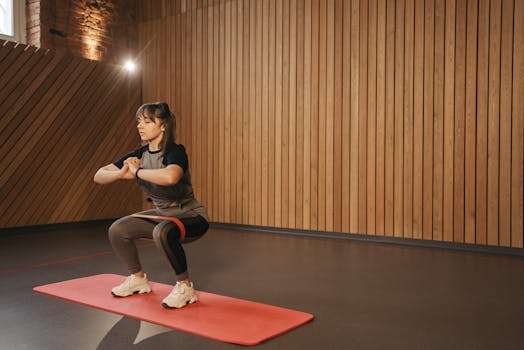 Photo: Pavel Danilyuk / Pexels
 Photo: Ketut Subiyanto / Pexels