
Unlock Your Goals: How Many Calories to Eat Daily?
how many calories to eat daily

Unlock Your Goals: How Many Calories to Eat Daily?

Master your daily caloric intake to achieve sustainable weight loss, muscle growth, or consistent maintenance with our expert guide.

Calculate Your Needs

Key Takeaways

  • ✓ Calorie needs vary significantly based on age, sex, weight, height, and activity level.
  • ✓ A deficit of 500 calories per day typically leads to 1 pound of weight loss per week.
  • ✓ Focus on nutrient-dense foods, not just calorie counts, for optimal health.
  • ✓ Tracking your intake for a short period can provide valuable insights into your eating habits.

How It Works

1
Determine Your Basal Metabolic Rate (BMR)

This is the minimum number of calories your body needs at rest. Use an online calculator or formula to get an estimate.

2
Factor in Your Activity Level

Multiply your BMR by an activity factor to find your Total Daily Energy Expenditure (TDEE). This is the total calories you burn in a day.

3
Set Your Goal (Loss, Gain, Maintenance)

Adjust your TDEE: subtract 300-500 calories for weight loss, add 300-500 for weight gain, or maintain TDEE for maintenance.

4
Track and Adjust Over Time

Monitor your progress and energy levels, then make small, incremental adjustments to your calorie intake as needed. Consistency is key.

Understanding Your Basal Metabolic Rate (BMR) and TDEE

Two ballet dancers practicing in a studio with a neon 'Metabolic Workout' sign. Photo: Alonso Ramírez / Pexels
Before you can accurately answer the question 'how many calories to eat daily,' you must first understand your body's fundamental energy requirements. This journey begins with calculating your Basal Metabolic Rate (BMR). Your BMR represents the number of calories your body burns at rest to perform basic life-sustaining functions such as breathing, circulation, cell production, nutrient processing, and maintaining body temperature. Imagine your body as a sophisticated machine; even when you're completely still, it's constantly working. This baseline energy expenditure is crucial because it accounts for the largest portion of your daily calorie burn for most individuals. Several formulas exist to estimate BMR, with the Mifflin-St Jeor equation being one of the most widely accepted for its accuracy. It considers your age, sex, weight, and height. While online calculators offer convenience, understanding the components helps demystify the process. Once you have your BMR, the next step is to factor in your activity level to arrive at your Total Daily Energy Expenditure (TDEE). Your TDEE is the total number of calories your body burns in a 24-hour period, including your BMR plus the energy expended through all physical activity, from walking to the kitchen to an intense gym workout. This is where the 'activity multiplier' comes into play. Different activity levels correspond to different multipliers: sedentary (little to no exercise), lightly active (light exercise 1-3 days/week), moderately active (moderate exercise 3-5 days/week), very active (hard exercise 6-7 days/week), and extra active (very hard exercise/physical job). Multiplying your BMR by the appropriate activity factor provides a much more realistic estimate of your actual daily calorie burn. For example, a person with a BMR of 1500 calories who is moderately active might have a TDEE of around 2300-2400 calories. This TDEE is the true starting point for determining your personalized calorie target, whether your goal is weight loss, maintenance, or muscle gain. Without accurately assessing your TDEE, any subsequent calorie targets will be based on incomplete data, potentially hindering your progress. It's a foundational step that many overlook, but it's absolutely essential for effective dietary planning. Remember, these are estimates, and individual metabolism can vary, but they provide an excellent framework.

Setting Your Calorie Goals for Weight Loss, Gain, or Maintenance
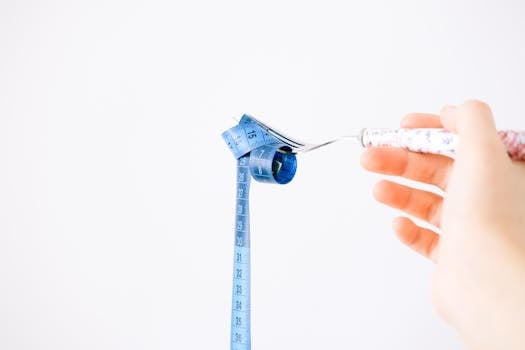
A blue measuring tape wrapped around a fork representing dieting or healthy eating concept. Photo: Beyzaa Yurtkuran / Pexels
Now that you understand your TDEE, the exciting part begins: tailoring your daily calorie intake to achieve your specific fitness objectives. Whether you're aiming to shed pounds, build muscle, or simply maintain your current physique, the principle remains the same: manipulate your calorie intake relative to your TDEE. For weight loss, the goal is to create a calorie deficit, meaning you consume fewer calories than your body burns. A commonly recommended and sustainable deficit is 500 calories per day, which typically leads to a loss of approximately one pound per week (since one pound of fat is roughly 3500 calories). For instance, if your TDEE is 2500 calories, eating around 2000 calories daily would put you in a deficit. It's crucial not to create too large a deficit, as this can lead to muscle loss, nutrient deficiencies, and a slowdown in metabolism, making long-term weight management more challenging. A gradual, consistent approach is always better than drastic cuts. Conversely, if your goal is weight gain, particularly muscle mass, you'll need to create a calorie surplus. This means consuming more calories than your body expends. A surplus of 300-500 calories per day is generally recommended for lean muscle gain, allowing your body ample energy for muscle repair and growth without excessive fat accumulation. If your TDEE is 2500 calories, aiming for 2800-3000 calories daily would be appropriate. The type of calories consumed during a surplus is also critical; focusing on protein and complex carbohydrates will fuel muscle synthesis and recovery, whereas a surplus of empty calories will likely lead to unwanted fat gain. For weight maintenance, the objective is to match your calorie intake precisely with your TDEE. If your TDEE is 2500 calories, consuming roughly 2500 calories per day should keep your weight stable. This requires ongoing awareness and occasional adjustments, as your TDEE can fluctuate with changes in activity level, age, and body composition. Regardless of your goal, consistency in tracking your intake (at least initially) and monitoring your body's response are paramount. Your body will provide feedback—whether through changes on the scale, in the mirror, or in your energy levels—that will guide necessary adjustments to your daily calorie target. This personalized approach ensures you're feeding your body exactly what it needs to move towards your desired outcome.

The Importance of Macronutrients and Food Quality

A classic platter of crispy fried chicken and golden French fries on a yellow background. Photo: Gonzalo Ruiz / Pexels
While knowing how many calories to eat daily is a critical first step, the quality of those calories, specifically their macronutrient composition, is equally, if not more, important for overall health, body composition, and performance. Macronutrients – protein, carbohydrates, and fats – are the building blocks of your diet, each playing distinct and vital roles. Protein is essential for muscle repair and growth, hormone production, and satiety. Adequate protein intake is particularly crucial for those looking to build muscle or lose weight, as it helps preserve lean mass during a calorie deficit. Carbohydrates are your body's primary energy source, fueling everything from brain function to intense workouts. Opting for complex carbohydrates like whole grains, fruits, and vegetables provides sustained energy and essential fiber, unlike simple sugars that cause rapid energy spikes and crashes. Fats, often demonized, are vital for hormone regulation, nutrient absorption, and cell membrane integrity. Healthy fats from sources like avocados, nuts, seeds, and olive oil are crucial for overall well-being and can actually aid in satiety and weight management. Focusing solely on calorie numbers without considering macronutrient balance is a common pitfall. For instance, 2000 calories from highly processed foods high in sugar and unhealthy fats will have a vastly different impact on your body than 2000 calories from whole, unprocessed foods rich in protein, complex carbs, and healthy fats. The former might lead to nutrient deficiencies, energy crashes, and increased inflammation, while the latter supports sustained energy, muscle health, and disease prevention. Beyond macronutrients, the micronutrient content (vitamins and minerals) of your food choices is also paramount. Nutrient-dense foods provide a wealth of these essential micronutrients, which are critical for countless bodily functions, immune health, and optimal metabolism. Prioritizing whole foods not only ensures a balanced macronutrient profile but also a rich supply of vitamins, minerals, and antioxidants. This holistic approach to nutrition, where both quantity and quality are considered, is the cornerstone of sustainable health and fitness. It moves beyond just hitting a number and instead focuses on nourishing your body effectively, allowing you to achieve your goals while feeling your best. Remember to consult resources like MyPlate guidelines for balanced meal planning.

Practical Tips for Tracking, Adjusting, and Sustaining Your Calorie Goals

Close-up of a smartphone displaying a health app on a green surface with 'HEALTH' text. Photo: Polina Zimmerman / Pexels
Successfully adhering to your daily calorie targets requires practical strategies for tracking, regular adjustments, and building sustainable habits. Initially, using a food tracking app can be incredibly insightful. Apps like MyFitnessPal or Cronometer allow you to log everything you eat and drink, providing a real-time overview of your calorie and macronutrient intake. This isn't about lifelong tracking, but rather about building awareness of portion sizes, understanding the caloric density of different foods, and identifying patterns in your eating habits. Many people are surprised to learn how many calories are in seemingly healthy snacks or how quickly liquid calories add up. Aim to track diligently for at least 2-4 weeks to get a solid baseline understanding. Once you have a baseline, regular adjustments are key. Your body is not a static machine; your metabolism can adapt, your activity levels might change, and your weight goals evolve. If you're consistently not seeing the desired results after a few weeks (e.g., weight loss stalls, or muscle gain is too slow), it's time to re-evaluate your TDEE and make small, incremental changes to your calorie intake. Avoid drastic cuts or additions; a change of 100-200 calories can make a significant difference over time. Listen to your body: are you feeling overly hungry, sluggish, or experiencing poor recovery? These are signs that your intake might be too low. Conversely, if you're gaining weight faster than desired, a slight reduction might be needed. Consistency is far more important than perfection. Don't let one 'off' day derail your entire week. Get back on track with your next meal. Focus on creating sustainable habits rather than restrictive diets. Meal prepping, planning snacks, and incorporating foods you enjoy in moderation can make the process much more manageable. Remember, the goal is long-term health and a positive relationship with food, not just hitting a number on a scale. Educate yourself on healthy eating habits to make informed choices.

Comparison

GoalCalorie ApproachMacronutrient FocusTypical Weekly Change
Weight LossTDEE - 300-500 kcalHigh Protein, Moderate Carbs, Healthy Fats0.5-1 lb loss
Muscle GainTDEE + 300-500 kcalHigh Protein, High Carbs, Moderate Fats0.5-1 lb gain
Weight MaintenanceApprox. TDEEBalanced Protein, Carbs, FatsStable
Extreme Weight LossTDEE - 750+ kcalVery High Protein, Low Carbs/Fats1.5-2 lbs loss (Not Recommended)

What Readers Say

"This guide completely changed how I approach my diet. Understanding how many calories to eat daily for my activity level made all the difference. I've lost 10 pounds sustainably!"

Sarah J. · Austin, TX

"I used to guess my calorie intake, but this article broke down the BMR and TDEE so clearly. Now I have a targeted approach to gaining muscle, and I feel much stronger."

Mark T. · Chicago, IL

"Following the advice on how many calories to eat daily helped me finally break through a plateau. I've maintained my weight for six months now, feeling energetic and nourished."

Jessica L. · Miami, FL

"The information on calorie adjustment was very helpful, though it took some trial and error to find my exact sweet spot. Great comprehensive guide overall, highly recommend for anyone serious about fitness."

David P. · Denver, CO

"As a busy mom, I needed a practical way to manage my nutrition. This article's tips on tracking and meal prepping made it feasible to figure out how many calories to eat daily without feeling overwhelmed."

Emily R. · Seattle, WA

Frequently Asked Questions

What is the average number of calories a person should eat daily?

There isn't a single 'average' number, as calorie needs are highly individualized. However, general guidelines suggest around 2000 calories for women and 2500 for men for maintenance, but this varies greatly based on age, weight, height, and activity level. Calculating your TDEE is the most accurate approach.

Is it safe to eat only 1200 calories a day for weight loss?

For most adults, consuming only 1200 calories a day is too restrictive and can lead to nutrient deficiencies, muscle loss, and metabolic slowdown. It's generally only recommended under strict medical supervision for specific cases. A moderate deficit of 300-500 calories below your TDEE is safer and more sustainable.

How do I accurately track my daily calorie intake?

To accurately track, use a food tracking app (like MyFitnessPal or Cronometer), weigh your food with a kitchen scale, and be diligent about logging everything you consume, including drinks and condiments. Read nutrition labels carefully and be honest with your entries for the best results.

Are all calories created equal?

While a calorie is a unit of energy regardless of its source, the impact of those calories on your body is not equal. Calories from nutrient-dense whole foods provide vitamins, minerals, and fiber, supporting overall health and satiety, whereas calories from processed foods often lack these benefits and can lead to poorer health outcomes.

How does exercise affect how many calories I should eat daily?

Exercise significantly increases your Total Daily Energy Expenditure (TDEE). The more active you are, the more calories your body burns, and therefore, the more calories you might need to consume to meet your goals (whether for maintenance, loss, or gain). Your activity level is a crucial factor in calculating your TDEE.

Who should consult a professional about their daily calorie needs?

Anyone with underlying health conditions, pregnant or breastfeeding individuals, competitive athletes, or those struggling with disordered eating should consult a registered dietitian, nutritionist, or doctor to determine appropriate daily calorie targets and nutritional strategies.

Can I lose weight without counting calories?

Yes, it is possible to lose weight without strictly counting calories by focusing on principles like portion control, eating whole unprocessed foods, increasing protein and fiber intake, reducing sugary drinks, and being mindful of hunger and fullness cues. However, calorie counting provides a precise method for those who prefer a structured approach.

What role does metabolism play in daily calorie requirements?

Your metabolism, the rate at which your body converts food into energy, plays a critical role. A faster metabolism means your body burns more calories at rest and during activity, requiring a higher daily intake. Factors like genetics, age, sex, and muscle mass influence your metabolic rate.

Take control of your health and fitness journey today by understanding how many calories to eat daily. Start calculating your personalized needs and build sustainable habits for a healthier, stronger you.

Topics: how many calories to eat dailydaily calorie intakecalorie needs for weight losscalorie calculatormacronutrients for fitness
Leo List

DK Escorts LU Escorts AT Escorts SE Escorts FI Escorts CH Escorts DE Escorts HR Escorts IE Escorts GR Escorts CZ Escorts NO Escorts BE Escorts FR Escorts SI Escorts IL Escorts NL Escorts PL Escorts HU Escorts ES Escorts IT Escorts PT Escorts SK Escorts RO Escorts ZA Escorts UY Escorts US Escorts UK Escorts NZ Escorts AU Escorts
Brampton weed
Adultwork EstrelaBet Vai de Bet R7 Bet Betão Galera Bet Rainbet Bet9ja Shop SportyBet BetKing Sisal Loto Foot Hollywoodbets YesPlay Odibets RushBet Jugabet BetWarrior BetCity MSport betPawa Fortebet