
how to build a home gym on a budget: Your Fitness Haven
how to build a home gym on a budget

how to build a home gym on a budget: Your Fitness Haven

Transform any space into an effective workout zone without overspending, unlocking consistent fitness from the comfort of your home.

Start Your Gym Now

Key Takeaways

  • ✓ You don't need expensive equipment to get a full-body workout.
  • ✓ Prioritize multi-functional items to maximize your budget and space.
  • ✓ Second-hand markets and DIY solutions offer significant savings.
  • ✓ Consistency and creativity are more important than a lavish setup.

How It Works

1
Define Your Fitness Goals & Space

Before buying anything, clarify what kind of workouts you'll do and measure your available space. This prevents unnecessary purchases and ensures your gym fits your lifestyle.

2
Prioritize Essential, Multi-Purpose Equipment

Focus on foundational items like resistance bands, dumbbells, and a jump rope that offer versatility for various exercises. Avoid single-use gadgets that quickly gather dust.

3
Explore Budget-Friendly Sourcing Options

Look for used equipment on platforms like Craigslist or Facebook Marketplace, or consider DIY alternatives for items like plyo boxes. Patience can yield great deals.

4
Gradually Expand Your Gym

Start with the basics and add more specialized equipment as your needs evolve and your budget allows. This approach prevents overwhelm and financial strain.

Defining Your Home Gym Needs and Space Optimization
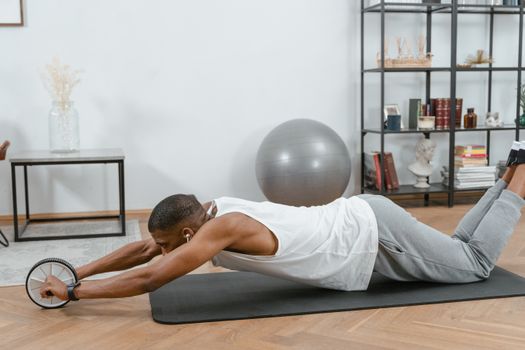
Man using an ab roller on a yoga mat indoors, promoting fitness and healthy lifestyle. Photo: MART PRODUCTION / Pexels
Embarking on the journey of how to build a home gym on a budget begins not with buying equipment, but with a clear understanding of your fitness aspirations and the physical space you have available. This foundational step is crucial for making smart, cost-effective decisions and avoiding impulse purchases that ultimately don't serve your goals. Start by asking yourself: What are your primary fitness objectives? Are you looking to build strength, improve cardiovascular health, increase flexibility, or a combination of these? Your answer will dictate the type of equipment you prioritize. For instance, someone focused on strength training might prioritize adjustable dumbbells and a sturdy bench, while a cardio enthusiast might look for a jump rope and resistance bands before investing in a larger machine. Someone interested in functional fitness will have different needs. Next, meticulously assess your available space. This is often the biggest constraint when building a home gym, especially on a budget. Do you have a dedicated room, a corner of a living area, a garage, or even just a small patch of floor? Measure the dimensions precisely. Consider ceiling height, as this impacts exercises like overhead presses or jumping. Think about storage – where will equipment go when not in use? Wall-mounted solutions, under-bed storage, or stackable items can be game-changers in smaller areas. Don't underestimate the power of vertical space. A simple wall-mounted pull-up bar takes up minimal floor space but offers immense workout versatility. Another critical aspect of space optimization is considering the floor itself. Will you need protective mats to prevent damage to your flooring or reduce noise? Interlocking foam tiles are an affordable and effective solution, providing cushioning and stability. These can be easily laid down and removed if your gym space is multi-purpose. Furthermore, think about ventilation and lighting. A well-lit and airy space will make your workouts more enjoyable and sustainable. If natural light is limited, invest in some bright, energy-efficient LED lights. By carefully defining your needs and optimizing your space from the outset, you lay a solid groundwork for building an effective and affordable home gym. This strategic planning prevents wasted money on equipment that doesn't fit your goals or your home, ensuring every dollar spent contributes directly to your fitness journey. Remember, the goal isn't to replicate a commercial gym but to create a personalized, efficient workout environment that suits your lifestyle and budget constraints.

Essential Multi-Purpose Equipment for an Affordable Home Gym
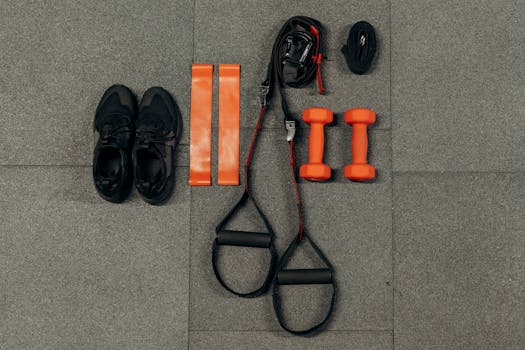
Flat lay of fitness gear including dumbbells, sneakers, and resistance bands for a home workout. Photo: Mikhail Nilov / Pexels
Once you've defined your goals and optimized your space, the next step in how to build a home gym on a budget is to select essential, multi-purpose equipment. The key here is versatility – choosing items that can be used for a wide range of exercises and target multiple muscle groups. This approach maximizes your investment and keeps your gym compact and efficient. Top of the list for any budget home gym should be a set of resistance bands. These come in various strengths and can be used for warm-ups, strength training, flexibility, and rehabilitation. They're incredibly portable, take up virtually no space, and are very inexpensive. You can use them for squats, bicep curls, triceps extensions, chest presses, and even assisted pull-ups. Next, consider adjustable dumbbells. While a full rack of dumbbells can be pricey and space-consuming, a single pair of adjustable dumbbells can replace an entire set, offering weights from 5 to 50+ pounds in one compact unit. This is a significant upfront investment but pays dividends in both versatility and space-saving over time. If adjustable dumbbells are still out of budget, a few fixed-weight dumbbells (light, medium, heavy) can still provide a solid foundation. Another must-have is a jump rope. Don't underestimate the power of this simple tool. It's an excellent cardiovascular workout, improving stamina, coordination, and agility, all for less than the cost of a fancy coffee. Kettlebells are also fantastic for full-body workouts, combining strength and cardio. Start with one moderate weight kettlebell and add heavier ones as you progress. For bodyweight exercises, a pull-up bar is invaluable. Wall-mounted or doorway versions are available at various price points. A doorway pull-up bar requires no installation and can be removed when not in use. It allows for pull-ups, chin-ups, and can even be used for floor exercises like push-ups by placing it on the ground. A yoga mat is essential not just for yoga, but for any floor exercises, stretching, or core work. It provides cushioning and prevents slipping. Finally, consider a sturdy exercise ball (stability ball). It's great for core work, balance training, and can even serve as a makeshift bench for certain dumbbell exercises. By focusing on these multi-functional items, you can create a highly effective home gym that caters to a wide array of exercises without needing a huge budget or dedicated room. Remember, consistency in using these tools far outweighs the quantity of equipment you own.

Smart Sourcing and DIY Solutions for Your Budget Home Gym

Flat lay of fitness gear including dumbbells, sneakers, and resistance bands for a home workout. Photo: Mikhail Nilov / Pexels
Once you have a clear list of essential, multi-purpose equipment, the next crucial step in how to build a home gym on a budget is to explore smart sourcing options and embrace DIY solutions. This is where significant savings can be made, turning your dream of an affordable home gym into a reality without compromising on quality or functionality. One of the most effective ways to save money is by buying used equipment. Platforms like Craigslist, Facebook Marketplace, and local garage sales are treasure troves for fitness gear. People often buy equipment with good intentions only to have it sit unused, leading them to sell it at a fraction of the original cost. You can find everything from dumbbells and kettlebells to benches and even larger cardio machines if you’re patient and persistent. When buying used, always inspect the items thoroughly for damage, rust, or wear and tear. For larger items, ensure all moving parts function smoothly and safely. Don't be afraid to negotiate prices – sellers are often motivated to clear space. Community forums and local gym closures can also be excellent sources. Sometimes, gyms upgrading their equipment will sell off their older but still perfectly functional gear at very low prices. Keep an eye on local classifieds or ask around at community centers. Embracing DIY solutions can further stretch your budget. For instance, instead of buying an expensive plyometric box, you can build a sturdy one from plywood for a fraction of the cost. There are numerous tutorials online for simple, safe DIY gym equipment. Sandbags filled with play sand or gravel make excellent, versatile weights for strength and conditioning, often costing less than a single dumbbell. Large empty detergent bottles or milk jugs filled with water or sand can serve as makeshift kettlebells or light dumbbells for certain exercises. Old tires can be repurposed for tire flips or sledgehammer slams, offering a powerful, full-body workout. Just ensure they are clean and free from sharp edges. For a stability ball alternative, a sturdy, partially deflated soccer or basketball can offer some similar benefits for core work. Even a simple, sturdy chair can be used for triceps dips, step-ups, and elevated push-ups. Don't overlook everyday household items. A sturdy backpack filled with books or water bottles can add resistance to squats or lunges. A towel can be used for various stretches and even some resistance exercises. The key is creativity and resourcefulness. By combining smart second-hand shopping with clever DIY projects, you can equip a highly functional home gym without spending a fortune, making your fitness journey accessible and sustainable. This approach not only saves money but also instills a sense of pride and ownership in your workout space, knowing you built it strategically and economically. This resourceful mindset is a cornerstone of building an effective home gym on a budget.

Common Mistakes to Avoid and Smart Tips for Your Budget Home Gym

Muscular man in a gym setting, taking a break while holding a kettlebell. Photo: Andrea Piacquadio / Pexels
Building a home gym on a budget is a rewarding endeavor, but it's easy to fall into common traps that can derail your progress or waste your hard-earned money. Being aware of these pitfalls and adopting smart strategies will ensure your home gym is both effective and sustainable. **Common Mistakes to Avoid:** * **Overbuying Single-Purpose Equipment:** Resist the urge to purchase flashy gadgets advertised for one specific exercise. These often gather dust and offer poor value for money. Focus on multi-functional items first. * **Ignoring Your Space Constraints:** Buying equipment that's too large for your area leads to clutter and frustration. Always measure twice and buy once, prioritizing compact and storable items. * **Prioritizing Cardio Machines Too Early:** Large treadmills or ellipticals are expensive and take up significant space. Start with bodyweight cardio (jump rope, burpees) or outdoor activities before considering a big machine, if at all. * **Neglecting Safety:** Don't compromise on safety for savings. Ensure any used equipment is in good working order, and your DIY projects are sturdy and stable. Invest in proper form over heavy weights initially. * **Buying All at Once:** This leads to rushed decisions and often overspending. Build your gym incrementally, adding equipment as your needs evolve and you find good deals. **Smart Tips for Success:** * **Start with Bodyweight Basics:** Before buying anything, master fundamental bodyweight exercises like push-ups, squats, lunges, and planks. These are free and form the foundation of all strength training. * **Utilize Online Resources:** YouTube, fitness apps, and free workout plans are invaluable for guiding your exercise routine. You don't need a personal trainer to get started. * **Create a Dedicated (Even Small) Space:** Even if it's just a corner, having a designated workout area helps with consistency and mentally separates your gym time from other activities. * **Invest in Quality Over Quantity:** For items you use frequently, like dumbbells or a resistance band set, spending a little more for durable, high-quality options will save you money in the long run. * **Maintain Your Equipment:** Regularly clean and inspect your gear. This prolongs its lifespan and ensures safety, especially for items purchased second-hand. * **Track Your Progress:** Keep a workout journal. Seeing your improvements is incredibly motivating and helps you understand what equipment or exercises are most effective for your goals. * **Be Patient and Opportunistic:** Good deals on used equipment don't appear every day. Be patient, check listings regularly, and be ready to act when a great offer comes along. By sidestepping these common errors and applying these smart tips, you'll be well on your way to building a home gym on a budget that not only fits your financial plan but also genuinely supports your fitness journey for years to come. Remember, the best gym is the one you'll actually use.

Comparison

FeatureBest Budget OptionMid-Range OptionPremium Option
DumbbellsFixed-weight (used)Adjustable set (entry-level)Adjustable set (high-end)
CardioJump Rope / BodyweightResistance Bands / KettlebellFolding Treadmill / Bike
Floor ProtectionFoam Interlocking TilesRubber Mats (sectional)Full Rubber Flooring
BenchSturdy Chair / Exercise BallAdjustable Utility BenchMulti-position FID Bench

What Readers Say

"Following these tips, I managed to build a home gym on a budget for under $200! I mostly used Facebook Marketplace for dumbbells and a yoga mat. It's so convenient to work out without leaving the house now."

Sarah J. · Austin, TX

"This guide was a game-changer. I focused on multi-purpose equipment like resistance bands and a pull-up bar, and I've seen amazing progress without breaking the bank. Highly recommend this approach to building a home gym on a budget."

Mark T. · Denver, CO

"I was skeptical about building a home gym on a budget, but this article showed me how. I repurposed an old tire and built a plyo box – my workouts are more intense and varied than ever, and I've saved hundreds!"

Jessica L. · Miami, FL

"The advice on sourcing used equipment was invaluable. It took some patience, but I got a great deal on an adjustable dumbbell set. While I wish there were more DIY ideas for larger items, the core principles for building a home gym on a budget are spot on."

David P. · Chicago, IL

"As someone with a small apartment, the space optimization tips were fantastic. I used a wall-mounted pull-up bar and stackable resistance bands. My 'gym' is tiny but mighty, proving you really can build a home gym on a budget anywhere."

Emily R. · Seattle, WA

Frequently Asked Questions

What's the absolute minimum I need to start a home gym on a budget?

To start a home gym on a budget, you essentially need a good pair of athletic shoes, comfortable workout clothes, and a clear space. For equipment, a jump rope and a set of resistance bands offer incredible versatility for cardio, strength, and flexibility, all for under $50. You can build a full-body routine with just these items and your bodyweight.

Is used gym equipment safe to buy?

Yes, used gym equipment can be perfectly safe if you inspect it thoroughly before purchase. Check for structural integrity, rust, cracks, frayed cables, or any signs of excessive wear. For items like dumbbells, rust is often cosmetic and can be removed, but for benches or cardio machines, ensure all moving parts and safety mechanisms are fully functional. Never compromise safety for a lower price.

How can I maximize a small space for a home gym?

Maximizing a small space for a home gym involves thinking vertically and prioritizing compact, multi-functional, and storable equipment. Wall-mounted pull-up bars, resistance bands, adjustable dumbbells, and stackable yoga mats are excellent choices. Consider furniture that doubles as workout equipment, like a sturdy ottoman for step-ups, and utilize under-bed storage for smaller items. Keep the area clutter-free to make it feel larger and more inviting for workouts.

How much should I expect to spend to build a home gym on a budget?

You can start building a home gym on a budget for as little as $50-$100 by focusing on resistance bands, a jump rope, and bodyweight exercises, especially if you source some items used. A more comprehensive setup including adjustable dumbbells, a pull-up bar, and floor mats might range from $300-$700, depending on new versus used purchases. The key is to add equipment incrementally as your needs and budget grow.

Are home gyms as effective as commercial gyms?

A well-planned home gym can be just as effective, if not more so, than a commercial gym for achieving personal fitness goals. While it might lack the sheer variety of machines, a home gym offers convenience, privacy, and eliminates commute time, which can significantly boost consistency. With smart equipment choices and a structured workout plan, you can perform a wide range of exercises to build strength, improve cardio, and enhance flexibility without the distractions or waiting times of a public gym.

Who should consider building a home gym on a budget?

Anyone looking to save money on gym memberships, those with limited time for commuting to a gym, individuals who prefer privacy during workouts, or people living in areas with limited access to commercial gyms should consider building a home gym on a budget. It's also ideal for parents who need to fit workouts around childcare or anyone seeking more flexibility and control over their fitness environment.

What are the biggest safety concerns with a budget home gym?

The biggest safety concerns with a budget home gym often stem from using improperly maintained used equipment, unstable DIY setups, or incorrect exercise form. Always ensure equipment is in good repair, sturdy, and appropriate for your strength level. Use proper lifting techniques, especially with free weights, and consider investing in protective flooring to prevent slips and absorb impact. Never attempt exercises that feel unsafe or beyond your current capabilities.

What future trends might impact building a home gym on a budget?

Future trends impacting budget home gyms include increased integration of AI-powered workout apps and virtual coaching, making personalized guidance more accessible without expensive trainers. The rise of smart, connected, but still affordable fitness devices will offer more data tracking. Additionally, continued innovation in multi-functional, compact equipment and the growth of online marketplaces for used goods will make building an effective, budget-friendly home gym even easier.

Ready to transform your fitness journey? By understanding how to build a home gym on a budget, you can create a powerful, personalized workout space that fits your finances and your lifestyle. Start small, be resourceful, and commit to your health – your ideal home gym is within reach.

Topics: how to build a home gym on a budgetaffordable home gymbudget fitness equipmentDIY home gymsmall space gym
Leo List
Brampton weed
Adultwork EstrelaBet Vai de Bet R7 Bet Betão Galera Bet Rainbet Bet9ja Shop SportyBet BetKing Sisal Loto Foot Hollywoodbets YesPlay Odibets RushBet Jugabet BetWarrior BetCity MSport betPawa Fortebet