
What is High Intensity Interval Training (HIIT)?
high intensity interval training

What is High Intensity Interval Training (HIIT)?

Fit man working out with battle ropes in a gym, showcasing strength and determination.Photo: Tima Miroshnichenko / Pexels

What is High Intensity Interval Training (HIIT)?

Discover how short, powerful bursts of exercise can revolutionize your fitness, burn fat, and boost your endurance.

Start Your HIIT Journey

Key Takeaways

  • ✓ HIIT involves short bursts of intense exercise followed by brief recovery periods.
  • ✓ It significantly improves cardiovascular fitness and endurance.
  • ✓ HIIT can burn more calories in less time compared to steady-state cardio.
  • ✓ It promotes excess post-exercise oxygen consumption (EPOC), leading to continued calorie burn.
  • ✓ Workouts typically range from 10 to 30 minutes, including warm-up and cool-down.

How It Works

1
Warm-up Thoroughly

Prepare your body for intense exertion with 5-10 minutes of light cardio and dynamic stretches. This prevents injury and optimizes performance.

2
Perform Intense Intervals

Engage in 20-60 seconds of maximum effort exercise, pushing your heart rate to 80-95% of its maximum. Think sprints, burpees, or jump squats.

3
Enter Recovery Period

Follow each intense interval with 10-60 seconds of low-intensity activity or complete rest. This allows partial recovery before the next burst.

4
Repeat and Cool Down

Cycle through intense and recovery periods for 10-20 minutes, then conclude with a 5-minute cool-down and static stretches to aid recovery.

Understanding the Fundamentals of High Intensity Interval Training
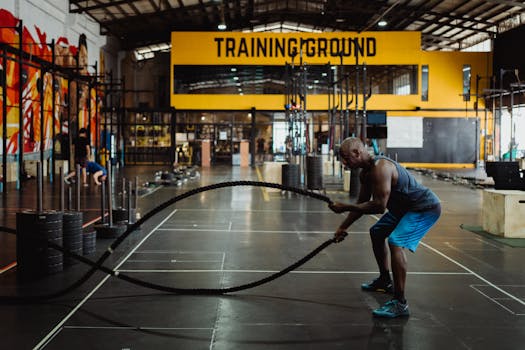
Athletic man engaging in a battle rope workout inside a modern gym setting for fitness training.Photo: Ketut Subiyanto / Pexels
High Intensity Interval Training, universally known as HIIT, is a powerful and time-efficient exercise strategy that has taken the fitness world by storm. But what exactly is high intensity interval training? At its core, HIIT involves alternating short periods of intense anaerobic exercise with less intense recovery periods. This dynamic approach challenges your body in a way that traditional steady-state cardio often doesn't, leading to a host of unique physiological adaptations and benefits. Unlike continuous moderate-intensity exercise, where your heart rate remains relatively stable, HIIT pushes your heart rate to near maximal levels during the work intervals, typically reaching 80-95% of your maximum heart rate. The subsequent recovery periods, where your heart rate drops to around 40-50% of its maximum, allow for a brief respite before the next intense burst. This cyclical pattern is what makes HIIT so effective and unique. The beauty of HIIT lies in its versatility and efficiency. A typical HIIT workout might only last 10 to 30 minutes, including warm-up and cool-down, yet it can yield comparable, if not superior, results to much longer moderate-intensity sessions. This is particularly appealing in our fast-paced modern lives, where finding extended blocks of time for exercise can be a significant challenge. The exercises themselves can vary widely, from bodyweight movements like burpees, jump squats, and mountain climbers to equipment-based activities such as sprinting on a treadmill, cycling, rowing, or even lifting weights with short rests. The key is the intensity – you must push yourself to your absolute limit during the work intervals, feeling breathless and challenged. Physiologically, HIIT triggers several profound responses in the body. During the high-intensity phases, your body relies heavily on anaerobic energy systems, depleting muscle glycogen stores rapidly and producing lactic acid. The recovery periods allow for partial clearance of this lactate and some replenishment of energy stores, preparing you for the next intense effort. Over time, this repeated stress and recovery improve your body's ability to utilize oxygen more efficiently (increasing VO2 max), enhance lactate threshold, and boost fat oxidation. It also leads to a phenomenon known as Excess Post-exercise Oxygen Consumption (EPOC), often referred to as the 'afterburn effect,' where your body continues to burn calories at an elevated rate for hours after the workout ends as it restores itself to its pre-exercise state. This makes HIIT an incredibly potent tool for overall fitness improvement and body composition changes. Understanding these fundamental mechanisms is crucial to appreciating why HIIT is so much more than just a quick workout; it's a strategic approach to optimizing physical performance and health.

The Science-Backed Benefits of Incorporating HIIT into Your Routine

Fit man working out with battle ropes in a gym, showcasing strength and determination.Photo: Tima Miroshnichenko / Pexels
The widespread popularity of High Intensity Interval Training isn't just a fleeting trend; it's backed by a robust body of scientific evidence demonstrating its remarkable benefits across various aspects of health and fitness. One of the most compelling advantages is its exceptional efficiency in improving cardiovascular health. Studies have consistently shown that HIIT can significantly increase VO2 max, which is the maximum amount of oxygen an individual can utilize during intense exercise. A higher VO2 max is a strong indicator of cardiovascular fitness and endurance, meaning your heart and lungs become more efficient at delivering oxygen to your working muscles. This improvement can be seen in a remarkably short period, sometimes in as little as a few weeks, making HIIT an incredibly effective way to boost your heart health. Beyond cardiovascular gains, HIIT is a powerful catalyst for fat loss. While traditional steady-state cardio burns calories during the activity, HIIT's unique structure amplifies the post-exercise calorie burn. As mentioned, the EPOC effect, or 'afterburn,' means your metabolism remains elevated for hours after your workout, leading to greater overall calorie expenditure. Furthermore, HIIT appears to be particularly effective at targeting stubborn visceral fat, the dangerous fat that accumulates around organs and is linked to numerous health problems. This isn't just about burning calories; it's about optimizing your body's ability to use fat as fuel. Research suggests that regular HIIT can improve insulin sensitivity and glucose metabolism, helping your body regulate blood sugar more effectively, which is beneficial for weight management and reducing the risk of type 2 diabetes. Another significant benefit is the preservation and even increase of muscle mass. Unlike prolonged steady-state cardio, which can sometimes lead to muscle catabolism (breakdown), the intense, explosive nature of HIIT, especially when incorporating resistance-based movements, can stimulate muscle growth and strength. This is crucial for maintaining a healthy metabolism and functional strength as we age. Moreover, HIIT workouts can boost the production of human growth hormone (HGH), a natural hormone that plays a vital role in fat loss, muscle growth, and overall cellular repair. The mental fortitude required for HIIT also translates into improved resilience and discipline, not just in the gym but in other areas of life. From enhancing endurance and power to improving body composition and metabolic health, the scientific rationale for integrating HIIT into your fitness regimen is undeniably strong.

Designing Your Own High Intensity Interval Training Workouts

Fit man working out with battle ropes in a gym, showcasing strength and determination.Photo: Tima Miroshnichenko / Pexels
While the core principle of what is high intensity interval training remains consistent – intense bursts followed by recovery – the actual design of a HIIT workout is incredibly flexible, allowing for endless variations to suit different fitness levels, equipment availability, and personal preferences. The first step in designing your own HIIT workout is to choose your exercises. These should be movements that you can perform with maximum effort and good form. Popular choices include bodyweight exercises like burpees, squat jumps, push-ups, mountain climbers, and high knees. If you have access to equipment, consider sprinting on a track or treadmill, cycling on a stationary bike, rowing, or using a battle rope. The key is to select exercises that engage multiple muscle groups and allow for high power output. Next, you need to determine your work-to-rest ratio. This is where the 'interval' part of HIIT comes into play. Common ratios include 1:1 (e.g., 30 seconds work, 30 seconds rest), 2:1 (e.g., 40 seconds work, 20 seconds rest), or even 1:2 (e.g., 20 seconds work, 40 seconds rest) for beginners or those focusing on power. The shorter the rest period relative to the work period, the more challenging the workout will be. Beginners might start with a 1:2 or 1:1 ratio, gradually progressing to more demanding ratios as their fitness improves. The total duration of the intense intervals (excluding warm-up and cool-down) typically ranges from 10 to 20 minutes, depending on the chosen ratio and number of rounds. A typical structure might look like this: a 5-10 minute dynamic warm-up, followed by 4-6 rounds of 2-4 different exercises performed back-to-back with short rests between exercises, and then a longer rest between rounds. Alternatively, you could perform one exercise for multiple sets with short rests. For example, 30 seconds of all-out sprints followed by 30 seconds of walking, repeated 8-10 times. Remember to always include a 5-minute cool-down with static stretches to aid recovery and flexibility. Consistency and progressive overload are vital for long-term progress in any fitness regimen, including HIIT. As you get fitter, you can increase the intensity of your work intervals, shorten your rest periods, add more rounds, or choose more challenging exercises. Listen to your body, prioritize proper form over speed, and don't be afraid to experiment to find what works best for you and keeps you motivated on your fitness journey.

Common Mistakes and Essential Tips for Effective HIIT Workouts
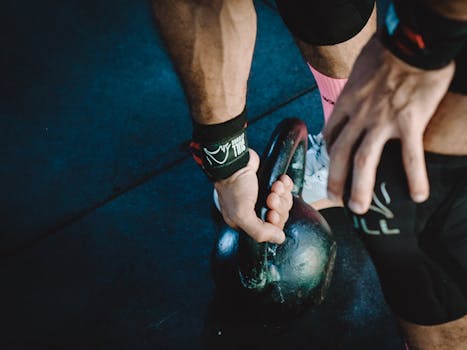
Muscular athlete lifting kettlebell during workout session, showcasing strength and fitness.Photo: Geancarlo Peruzzolo / Pexels
While High Intensity Interval Training offers incredible benefits, it's also a demanding form of exercise that requires careful execution to maximize results and minimize the risk of injury. Understanding common pitfalls and adhering to essential tips will ensure your HIIT workouts are both effective and sustainable. **Common Mistakes to Avoid:** * **Skipping the Warm-up:** Diving straight into high-intensity exercise without proper preparation is a recipe for injury. Muscles need to be warm and joints mobilized to perform explosive movements safely. * **Neglecting the Cool-down:** Just as crucial as the warm-up, a cool-down helps bring your heart rate down gradually, reduces muscle soreness, and improves flexibility. Skipping it can hinder recovery. * **Insufficient Intensity:** The 'high intensity' part of HIIT is non-negotiable. If you're not pushing yourself to near maximal effort during the work intervals, you're not truly doing HIIT, and you won't reap its full benefits. * **Too Much Intensity, Too Often:** While intensity is key, overdoing HIIT can lead to overtraining, burnout, and increased injury risk. For most individuals, 2-3 HIIT sessions per week on non-consecutive days is sufficient. * **Poor Form:** Sacrificing proper technique for speed or more repetitions is dangerous. Bad form can lead to strains, sprains, and long-term injuries. Prioritize quality of movement over quantity. * **Ignoring Recovery:** Adequate rest, nutrition, and sleep are paramount for recovery between HIIT sessions. Without proper recovery, your body cannot adapt and improve. **Essential Tips for Effective HIIT:** * **Listen to Your Body:** Pay attention to how you feel. If a movement causes sharp pain, stop immediately. Modify exercises if needed to match your current fitness level. * **Progress Gradually:** Don't try to do too much too soon. Start with shorter work intervals and longer rest periods, then progressively increase intensity, duration, or decrease rest as you get fitter. * **Vary Your Workouts:** Keep things interesting and challenge different muscle groups by rotating exercises and workout structures. This also helps prevent plateaus. * **Hydrate Adequately:** Drink plenty of water before, during, and after your HIIT sessions to stay hydrated and support bodily functions. * **Fuel Your Body:** Consume a balanced diet with sufficient protein, carbohydrates, and healthy fats to support energy levels and muscle repair. * **Invest in Good Footwear:** Proper athletic shoes provide cushioning and support, which are crucial for high-impact movements often found in HIIT. * **Consider a Fitness Tracker:** A heart rate monitor can be an invaluable tool to ensure you're hitting the correct intensity zones during your work intervals. By avoiding these common mistakes and implementing these essential tips, you can ensure your High Intensity Interval Training journey is safe, effective, and rewarding, leading to significant improvements in your overall fitness and well-being.

Comparison

FeatureHIIT (High Intensity Interval Training)LISS (Low-Intensity Steady-State)Strength Training
Time EfficiencyExcellent (10-30 min)Moderate (30-60+ min)Moderate (30-60 min)
Cardiovascular BenefitsHigh (VO2 max, endurance)Moderate (endurance)Moderate (heart health)
Fat Loss PotentialHigh (EPOC, visceral fat)Moderate (during exercise)High (muscle mass, metabolism)
Muscle Preservation/GainGood (especially with resistance)Low (can be catabolic)Excellent (primary focus)
Impact on MetabolismSignificant (post-workout elevation)Moderate (during exercise)Significant (muscle mass increases BMR)
Injury RiskModerate (due to intensity)Low (low impact)Moderate (with improper form)
VersatilityHigh (bodyweight, equipment)High (running, cycling)High (free weights, machines)

What Our Readers Say

5 ★★★★★

"I used to dread long cardio sessions. Discovering what is high intensity interval training completely changed my perspective! I'm fitter than ever in half the time."

5 ★★★★★

"As a busy professional, HIIT is a lifesaver. My energy levels are up, and I've seen a noticeable drop in body fat since I started incorporating these intense bursts."

5 ★★★★★

"After 3 months of consistent HIIT, my mile time dropped by over a minute, and I feel so much stronger. Understanding what is high intensity interval training truly unlocked my athletic potential."

4 ★★★★☆

"HIIT is incredibly effective, but it definitely pushes you to your limits. It took some getting used to the intensity, but the results are undeniable for improving stamina."

5 ★★★★★

"I love how versatile HIIT is. I can do bodyweight circuits at home or sprint intervals at the park. It keeps my workouts fresh and challenging, which is exactly what I need."

Frequently Asked Questions

What is high intensity interval training exactly and how is it different from regular cardio?
High Intensity Interval Training (HIIT) involves short, intense bursts of anaerobic exercise followed by brief recovery periods, pushing your heart rate to near maximal levels. Regular cardio, or LISS (Low-Intensity Steady-State), maintains a moderate, consistent heart rate over a longer duration. HIIT is generally more time-efficient and creates a greater 'afterburn' effect.
Is HIIT safe for beginners or those new to exercise?
While effective, HIIT is very demanding. Beginners should start slowly, choosing lower-impact exercises, longer recovery periods, and fewer rounds. It's advisable to consult a doctor before starting any new high-intensity regimen, especially if you have underlying health conditions.
How often should I do HIIT workouts per week?
For most individuals, 2-3 HIIT sessions per week on non-consecutive days are optimal. This allows for adequate recovery and prevents overtraining. On other days, you can incorporate strength training, LISS cardio, or active recovery.
Does HIIT help with weight loss more than traditional cardio?
Many studies suggest HIIT can be more effective for weight loss, particularly fat loss, compared to traditional cardio, despite being shorter in duration. This is largely due to the significant calorie burn during the workout and the prolonged 'afterburn' effect (EPOC) that elevates your metabolism for hours afterward.
Can I do HIIT with only bodyweight exercises?
Absolutely! Many effective HIIT workouts can be done using only your bodyweight. Exercises like burpees, jump squats, mountain climbers, push-ups, and planks can be combined into highly intense and challenging intervals, making HIIT accessible anywhere, anytime.
Who should consider incorporating what is high intensity interval training into their routine?
HIIT is ideal for individuals looking to maximize fitness results in minimal time, improve cardiovascular health, boost endurance, and accelerate fat loss. It's particularly beneficial for those with limited time for exercise, athletes aiming to enhance performance, and anyone seeking a dynamic and challenging workout.
What are the common risks or downsides of doing too much HIIT?
Overdoing HIIT can lead to overtraining, which manifests as persistent fatigue, decreased performance, increased injury risk, hormonal imbalances, and impaired immune function. It can also lead to mental burnout due to the high demands. Proper rest and recovery are crucial.
What are the future trends for high intensity interval training?
Future trends in HIIT are likely to focus on personalization through wearable tech and AI, integrating more functional movements and resistance training, and developing hybrid formats that combine HIIT with other disciplines like yoga or Pilates for holistic fitness. Virtual and at-home HIIT classes will also continue to evolve.

Ready to transform your fitness journey and experience the remarkable benefits of what is high intensity interval training? Start incorporating these powerful, time-efficient workouts into your routine and unlock a new level of strength, endurance, and fat-burning potential. Your peak performance awaits!

Topics: high intensity interval trainingHIIT workoutsinterval training benefitsHIIT for weight lossshort intense workouts
Leo List
Brampton weed
Adultwork EstrelaBet Vai de Bet R7 Bet Betão Galera Bet Rainbet Bet9ja Shop SportyBet BetKing Sisal Loto Foot Hollywoodbets YesPlay Odibets RushBet Jugabet BetWarrior BetCity MSport betPawa Fortebet