Before starting, understand your current physical condition. This helps you choose appropriate exercise intensities and durations to prevent injury and ensure effectiveness.
2
Choose Your Workout Style
Decide on a workout structure – whether it's continuous cardio, interval training (HIIT), or a circuit. Varying your style keeps workouts engaging and challenges your body differently.
3
Learn Key Bodyweight Movements
Familiarize yourself with fundamental exercises like jumping jacks, high knees, and burpees. Proper form is crucial for maximizing benefits and avoiding strain or injury.
4
Create a Consistent Schedule
Integrate your at-home cardio into your weekly routine. Regularity is key to seeing results and building lasting fitness habits for improved cardiovascular health.
The Power of Bodyweight Cardio: Why No Equipment is No Problem
Photo: Ferdinand Studio / Pexels
In today's fast-paced world, finding time and resources for a gym membership or expensive equipment can be a significant hurdle to maintaining a healthy lifestyle. However, the good news is that achieving excellent cardiovascular fitness doesn't require any of these. The power of bodyweight cardio lies in its accessibility and effectiveness. Your own body provides all the resistance you need to elevate your heart rate, burn calories, and improve endurance right from the comfort of your home. This approach democratizes fitness, making it available to everyone, regardless of budget or space constraints.
Bodyweight exercises engage multiple muscle groups simultaneously, leading to a more efficient workout and greater calorie expenditure. Movements like jumping jacks, burpees, and mountain climbers aren't just about getting your heart pumping; they also build strength, coordination, and agility. This holistic approach to fitness means you're not just working your cardiovascular system; you're also developing functional strength that translates to everyday activities. Moreover, exercising at home eliminates travel time and the intimidation some feel in a gym environment, allowing you to focus purely on your workout. It's an empowering way to take control of your health. Discover more about effective home workouts and how they can transform your fitness journey. The flexibility of at-home cardio also means you can fit a quick session into a busy schedule, making consistency much easier to achieve. Whether you have 10 minutes or an hour, there's a bodyweight cardio routine that can fit your needs and help you reach your fitness goals.
Top At Home Cardio Exercises for Every Fitness Level
Photo: MART PRODUCTION / Pexels
Embarking on your at-home cardio journey is exciting, and the variety of exercises available ensures you'll never get bored. Here's a breakdown of some of the most effective no-equipment cardio moves, suitable for beginners to advanced fitness enthusiasts:
**For Beginners:**
* **Marching in Place:** A simple, low-impact way to warm up and elevate your heart rate. Focus on lifting your knees high.
* **Knee Lifts:** Stand tall and alternate bringing one knee up towards your chest, engaging your core. This is a controlled, effective movement.
* **Arm Circles:** While seemingly small, large arm circles can significantly contribute to warming up your upper body and increasing blood flow.
* **Calf Raises:** Stand on the balls of your feet and slowly lower. Great for circulation and calf strength.
**Intermediate Moves:**
* **Jumping Jacks:** A classic for a reason. They work your whole body and quickly raise your heart rate.
* **High Knees:** Run in place, bringing your knees as high as possible towards your chest. This is a fantastic calorie burner.
* **Butt Kicks:** Similar to high knees, but focus on kicking your heels towards your glutes. Great for hamstring engagement.
* **Shadow Boxing:** Punching and dodging in the air provides a full-body workout that improves coordination and cardiovascular endurance.
**Advanced Challenges:**
* **Burpees:** The ultimate full-body cardio and strength builder. From a standing position, drop to a plank, perform a push-up (optional), jump feet forward, and then jump explosively upwards.
* **Mountain Climbers:** Start in a plank position and rapidly alternate bringing your knees towards your chest. Excellent for core and cardio.
* **Plank Jacks:** From a plank position, jump your feet wide and then back together, maintaining core stability. This adds a cardiovascular challenge to a static exercise.
* **Squat Jumps:** Perform a regular squat, then explode upwards into a jump. Land softly and immediately go into the next squat. This builds explosive power and endurance.
Remember to always prioritize proper form over speed, especially when starting new exercises. Listen to your body and take breaks when needed. Gradually increase your intensity and duration as your fitness improves.
Structuring Your At-Home Cardio Workout: Interval vs. Continuous Training
Photo: cottonbro studio / Pexels
Once you have a repertoire of bodyweight exercises, the next step is to structure them into an effective workout routine. Two popular and highly effective methods for at-home cardio are continuous training and interval training (often known as HIIT, or High-Intensity Interval Training). Both have distinct benefits and can be incorporated into your fitness regimen based on your goals and preferences.
**Continuous Training:** This method involves performing exercises at a steady, moderate intensity for a prolonged period, typically 20-60 minutes. Think of it as a sustained effort where you maintain a consistent heart rate throughout the workout. Examples include brisk walking in place, continuous marching, or a steady flow of jumping jacks and knee lifts. The benefits of continuous training include improved aerobic endurance, enhanced fat burning at lower intensities, and reduced risk of injury due to its lower impact nature. It's an excellent starting point for beginners and a solid foundation for overall cardiovascular health. It also helps build a strong aerobic base that can support more intense workouts later on. Learn how to build endurance effectively with consistent practice.
**Interval Training (HIIT):** HIIT involves alternating short bursts of intense exercise with brief periods of rest or lower-intensity recovery. A typical HIIT structure might be 30 seconds of maximum effort followed by 15-30 seconds of rest, repeated for 10-20 minutes. Burpees, squat jumps, and mountain climbers are perfect for the high-intensity phases. The advantages of HIIT are numerous: it's incredibly time-efficient, can burn more calories in a shorter period, boosts metabolism for hours after the workout (EPOC or 'afterburn' effect), and significantly improves both aerobic and anaerobic fitness. However, due to its high intensity, it requires a good baseline fitness level and adequate recovery between sessions. For a balanced routine, consider alternating between continuous training and HIIT workouts throughout your week. This ensures you're challenging your body in different ways, leading to comprehensive fitness improvements.
Maximizing Your At-Home Cardio: Tips & Common Mistakes to Avoid
Photo: Pavel Danilyuk / Pexels
To get the most out of your at-home cardio exercises with no equipment, it's essential to follow best practices and steer clear of common pitfalls. These tips will help you stay motivated, safe, and achieve optimal results.
**Tips for Success:**
* **Warm-Up and Cool-Down:** Always dedicate 5-10 minutes to warming up (light cardio, dynamic stretches) before your workout and cooling down (static stretches) afterward. This prepares your body for exercise and aids in recovery, reducing muscle soreness.
* **Listen to Your Body:** Pay attention to how your body feels. While pushing yourself is good, pain is a sign to stop. Modify exercises if needed and take rest days to prevent overtraining and injury.
* **Stay Hydrated:** Drink water before, during, and after your workout. Proper hydration is crucial for energy levels, performance, and overall health.
* **Proper Form Over Speed:** Focus on executing each movement with correct technique. Poor form can lead to injuries and reduce the effectiveness of the exercise. If you're unsure, watch videos or consult reliable fitness resources.
* **Progressive Overload:** As you get fitter, challenge yourself by increasing workout duration, intensity, or the number of repetitions/sets. This continuous progression is key to ongoing improvement.
* **Mix It Up:** Vary your exercises and workout structures to keep your body guessing and prevent plateaus. This also helps maintain motivation.
* **Track Your Progress:** Keep a simple journal or use an app to record your workouts. Seeing your improvements can be a huge motivator.
**Common Mistakes to Avoid:**
* **Skipping Warm-up/Cool-down:** This is a recipe for injury and hinders flexibility development.
* **Not Pushing Hard Enough (or Too Hard):** Find a balance. Your workout should feel challenging but not impossible. For cardio, aim for an elevated heart rate where talking is difficult but not impossible.
* **Ignoring Pain:** Differentiate between muscle fatigue and sharp pain. Pain means stop and assess.
* **Inconsistency:** Sporadic workouts yield minimal results. Aim for 3-5 cardio sessions per week.
* **Poor Posture:** Especially during planks, mountain climbers, and burpees, maintaining a straight back and engaged core is vital. Avoid slouching or arching your back.
* **Holding Your Breath:** Breathe deeply and consistently throughout your exercises. Oxygen is fuel for your muscles.
* **Not Fueling Your Body:** A balanced diet provides the energy needed for effective workouts and proper recovery. Don't underestimate the role of nutrition.
Comparison
Feature
At-Home Cardio (No Equipment)
Gym Cardio (Equipment)
Outdoor Running
Cost
Free
Membership + Equipment
Free (Shoes needed)
Convenience
Instant, Any Time
Travel, Open Hours
Weather Dependent
Variety of Exercises
Good (Bodyweight)
Excellent (Machines)
Limited (Running, Sprints)
Space Required
Minimal
Dedicated Gym Space
Open Space
Impact Level Control
Moderate to High
Low to High
Moderate to High
Privacy
✓
✗
✗
Community Aspect
✗
✓
Optional
What Readers Say
★★★★★
"I used to think I needed a gym, but these at home cardio exercises no equipment changed everything. My energy levels are through the roof, and I feel so much stronger!"
Sarah J. · Austin, TX
★★★★★
"As a busy dad, finding time for fitness was hard. This guide to at home cardio exercises no equipment gave me practical routines I can do during my kids' nap time. Highly recommend!"
Mark D. · Miami, FL
★★★★★
"Within just two months of consistently doing these at home cardio exercises no equipment, I lost 10 pounds and significantly improved my running endurance. It's truly amazing what you can achieve without gear."
Jessica L. · Denver, CO
★★★★★
"While I initially missed the gym atmosphere, the flexibility and effectiveness of these at home cardio exercises no equipment won me over. Some days I wish I had a little more variety, but the core routines are solid."
Chris B. · Portland, OR
★★★★★
"Traveling for work meant my fitness suffered, but not anymore! I can do these at home cardio exercises no equipment in any hotel room, keeping my routine consistent. Lifesaver!"
Emily R. · Chicago, IL
Frequently Asked Questions
What are the best at home cardio exercises no equipment for weight loss?
For weight loss, focus on high-intensity exercises that elevate your heart rate quickly and engage large muscle groups. Burpees, mountain climbers, squat jumps, and high knees are excellent choices. Combining these into a HIIT routine can maximize calorie burn and boost your metabolism even after your workout is finished.
Can I really get a good cardio workout without any equipment?
Absolutely! Your bodyweight provides sufficient resistance to create a highly effective cardiovascular workout. Exercises like jumping jacks, running in place, and various plyometric movements can significantly increase your heart rate, improve endurance, and burn calories, proving that no equipment is truly needed for great results.
How often should I do at home cardio exercises no equipment?
For general health and fitness, aim for at least 150 minutes of moderate-intensity cardio or 75 minutes of vigorous-intensity cardio per week, spread across 3-5 sessions. You can adjust this based on your fitness level and goals, ensuring you also include rest days for recovery.
Are at home cardio exercises no equipment as effective as gym machines?
Yes, they can be equally, if not more, effective. While gym machines offer specific resistance and controlled movements, at-home bodyweight cardio often engages more muscle groups simultaneously, improving functional strength, coordination, and agility alongside cardiovascular health. The key is consistent effort and proper form.
What's the difference between HIIT and continuous cardio at home?
HIIT (High-Intensity Interval Training) involves short bursts of maximum effort followed by brief rest periods, leading to higher calorie burn in less time and an 'afterburn' effect. Continuous cardio involves maintaining a steady, moderate intensity for a longer duration, focusing on endurance and consistent heart rate elevation. Both are effective; HIIT is generally more time-efficient and intense.
Who should use at home cardio exercises no equipment?
Anyone looking to improve their cardiovascular health, burn calories, increase endurance, or reduce stress can benefit. It's ideal for those with limited access to a gym, tight schedules, or who prefer the privacy and convenience of working out from home. All fitness levels can find suitable modifications.
Are there any risks associated with at home cardio exercises no equipment?
As with any exercise, there's a risk of injury, especially with improper form or overexertion. It's crucial to warm up, cool down, listen to your body, and gradually increase intensity. If you have pre-existing health conditions, consult a doctor before starting a new exercise regimen.
What are the future trends for at home cardio exercises no equipment?
Future trends point towards more personalized AI-driven workout plans, interactive virtual classes, and gamified fitness experiences that integrate seamlessly into smart home environments. Expect increased focus on functional movements, mindfulness, and recovery protocols to complement intense cardio sessions, making fitness more engaging and holistic.
Ready to transform your fitness journey? Embrace the simplicity and power of at home cardio exercises no equipment. Start today and discover a healthier, more energetic you, all from the comfort of your own space!

 Photo: Ferdinand Studio / Pexels
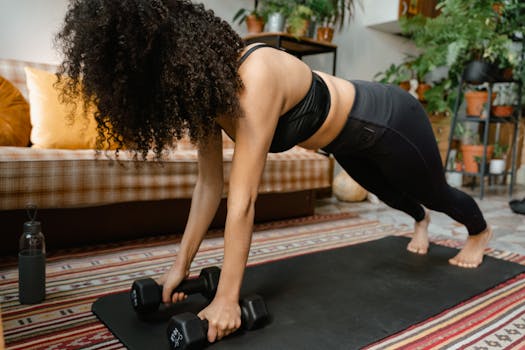 Photo: MART PRODUCTION / Pexels
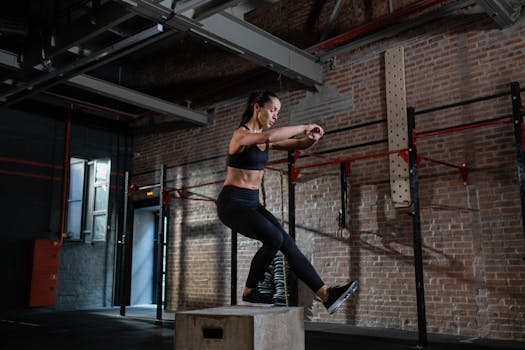 Photo: cottonbro studio / Pexels
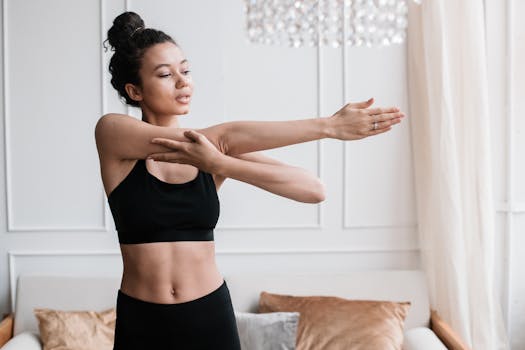 Photo: Pavel Danilyuk / Pexels