Car rental Barcelona vs public transport: Your Fitness Trip
Car rental Barcelona vs public transport

Car rental Barcelona vs public transport: Your Fitness Trip

Optimize your active Barcelona adventure by choosing the perfect transportation for your fitness goals.

Plan Your Active Trip

Key Takeaways

  • ✓ Barcelona's public transport is extensive, affordable, and eco-friendly.
  • ✓ Car rental offers unparalleled flexibility for exploring beyond city limits or carrying equipment.
  • ✓ Traffic and parking in Barcelona can be challenging for car renters.
  • ✓ Fitness goals, budget, and itinerary heavily influence the best transport choice.

How It Works

1
Define Your Fitness Itinerary

Outline your daily activities: gym visits, hiking trails, beach workouts, or sports events. Knowing your destinations is key to choosing the right transport.

2
Assess Equipment Needs

Consider if you'll be carrying specialized gear like bikes, surfboards, or heavy gym bags. This can heavily sway the balance towards a car.

3
Evaluate Your Budget & Time

Compare the cost of car rental (including fuel, parking, insurance) versus public transport passes. Factor in travel time and potential delays for both options.

4
Consider Your Comfort & Mobility

Decide if you prefer the independence of driving or the convenience of letting someone else navigate. Your personal comfort with city driving and walking distances matters.

Navigating Barcelona for Fitness Enthusiasts: Public Transport Advantages

Commuters wait at Barceloneta Metro station in Barcelona, Spain, showcasing urban daily life. Photo: El gringo photo / Pexels
For the fitness-minded traveler heading to Barcelona, the city's public transport system presents a compelling case. It’s an extensive, efficient, and surprisingly user-friendly network that can significantly contribute to your active lifestyle. Imagine starting your day with a run along Barceloneta beach, then seamlessly hopping on a metro to a yoga studio in Gràcia, or catching a bus to a climbing gym near Montjuïc. The T-Casual ticket, for instance, offers ten journeys across various modes (metro, bus, tram, FGC commuter trains) at a very economical price, making it ideal for those planning multiple daily excursions without breaking the bank. This affordability frees up more of your budget for fitness classes, healthy meals, or perhaps a premium gym day pass. Beyond the financial benefits, opting for public transport inherently promotes more physical activity. Walking to and from stations, navigating stairs, and covering distances between stops become integrated into your daily routine, adding incidental exercise that complements your dedicated workouts. This can be a huge boon for maintaining and even boosting your overall fitness levels during your trip. Furthermore, Barcelona's public transport is environmentally conscious. Choosing trains, buses, and trams over a private vehicle reduces your carbon footprint, aligning with a holistic approach to health and wellness that often extends to environmental responsibility. For those concerned about traffic congestion and the notoriously tricky parking situation in Barcelona – especially in bustling areas like the Gothic Quarter or Eixample – public transport completely bypasses these stressors. You can relax, read, or plan your next workout instead of battling traffic or endlessly searching for a parking spot. The metro lines, in particular, are incredibly fast and reliable, connecting major attractions, fitness centers, and residential areas with impressive speed. This means less wasted time in transit and more time dedicated to your chosen activities, whether it's an intense CrossFit session or a leisurely cycle through Ciutadella Park. For visitors staying within the city's main districts and aiming for an active itinerary focused on urban exploration and easily accessible fitness facilities, public transport is often the superior choice, offering convenience, cost-effectiveness, and an added dose of daily movement.

The Freedom of Four Wheels: Car Rental for Your Active Barcelona Adventure
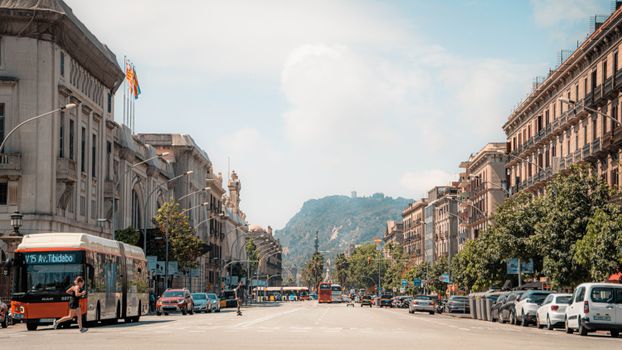
Lively urban street scene in Barcelona showcasing classic architecture and Montjuïc mountain in the backdrop. Photo: Danique Veldhuis / Pexels
While Barcelona's public transport is excellent, a car rental offers a level of freedom and flexibility that can be invaluable for specific fitness goals and travel styles. If your active itinerary extends beyond the city center, perhaps involving day trips to the stunning Montserrat mountains for hiking, the coastal towns of Costa Brava for trail running and swimming, or even venturing into the Pyrenees for more challenging treks, a car becomes almost indispensable. Public transport options to these more remote, nature-focused destinations are often limited, time-consuming, and may require multiple transfers, eating into your precious activity time. With a rental car, you dictate your schedule, allowing for spontaneous detours to picturesque viewpoints, hidden coves perfect for a secluded swim, or specific trailheads that are otherwise inaccessible. Consider the practicality of carrying fitness equipment. If you're bringing your own road bike for epic rides through the Catalan countryside, a surfboard for catching waves on the coast, or a substantial amount of gear for a specific sporting event, a car provides the necessary storage and ease of transport. Trying to maneuver a bike or a large backpack onto a crowded metro or bus can be a logistical nightmare, whereas a car offers a private, secure space for your belongings. This convenience can significantly reduce stress and enhance your overall experience. For those traveling with family or a group of fitness buddies, a car can also be a more comfortable and efficient way to move around, especially if you have varying fitness levels or prefer to stick together. Splitting the cost of a rental car, fuel, and tolls among several people can sometimes even make it comparable to individual public transport passes, depending on the itinerary. Moreover, after an intense workout or a long day of exploring, the comfort of a private vehicle – with air conditioning and the ability to play your own motivational music – can be a welcome luxury. While parking can be a challenge in central Barcelona, many hotels offer parking facilities, and there are underground car parks available, albeit often at a cost. Planning routes in advance and utilizing navigation apps can help mitigate traffic concerns. Ultimately, a car rental empowers you to craft a truly bespoke and unconstrained fitness adventure, allowing you to access a wider range of landscapes and activities that might otherwise be out of reach.

You may also find Rent Car Barcelona useful.

Weighing the Costs and Convenience: Public Transport vs. Car Rental Budget & Time
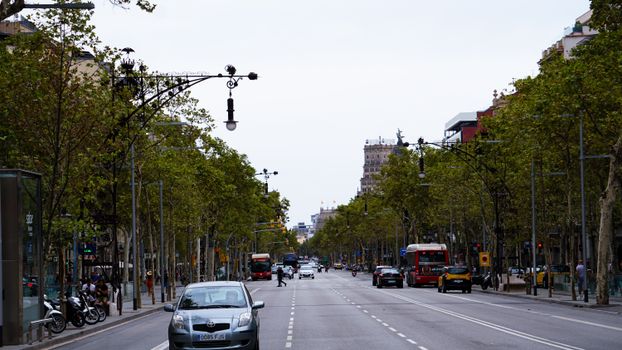
A bustling street view in Barcelona capturing urban transport and architecture. Photo: Zak Mir / Pexels
When planning your fitness-focused trip to Barcelona, a critical factor in the car rental vs. public transport debate is the overall cost and convenience. Let's break down the financial implications. Public transport in Barcelona is remarkably affordable. A T-Casual card, offering 10 journeys, costs around €11.35 (as of early 2024) and can be used by multiple people, making it incredibly economical for short to medium stays. Weekly or monthly passes offer even greater value for longer visits. This cost typically covers all modes of transport within the city's Zone 1, which includes most major attractions and many fitness facilities. Comparatively, car rental costs quickly add up. Beyond the daily rental fee, which can range from €30-€80+ depending on the vehicle type, season, and provider, you must factor in fuel, which is significantly more expensive in Spain than in the US. Parking is another major expense; street parking is scarce and metered, while underground car parks can cost €25-€40 per day or more. Additionally, insurance, potential tolls for highways (especially when leaving the city), and a mandatory security deposit will impact your budget. For the budget-conscious fitness traveler, public transport nearly always wins on price for intra-city movement. Regarding convenience, public transport offers a different kind of ease. The metro runs frequently, is almost always on time, and allows you to bypass surface traffic entirely. Buses cover areas not served by the metro, and the extensive network means you're rarely far from a stop. Real-time apps like TMB App make navigation simple. The inconvenience comes from potential crowding during peak hours and the need to walk to and from stations, though for fitness enthusiasts, this is often a benefit. Car rental offers unparalleled schedule convenience – you leave when you want, stop where you want. However, this comes with its own set of inconveniences in Barcelona. Driving in a dense European city can be stressful, with narrow streets, one-way systems, and aggressive drivers. Finding parking is a constant challenge, and many central areas have restricted access (ZBE – Low Emission Zones) that require specific permits or fines for non-compliant vehicles, which rental cars may not automatically have. While a car can save time for specific out-of-city excursions, within Barcelona, you might find yourself spending more time stuck in traffic or searching for parking than you would on the metro. For those prioritizing efficiency and minimizing transit time within the city, public transport often proves to be the more convenient and less stressful option, especially when combined with a good pair of walking shoes and a desire to explore on foot.

Top Tips for Fitness Travelers: Making Your Barcelona Transport Choice
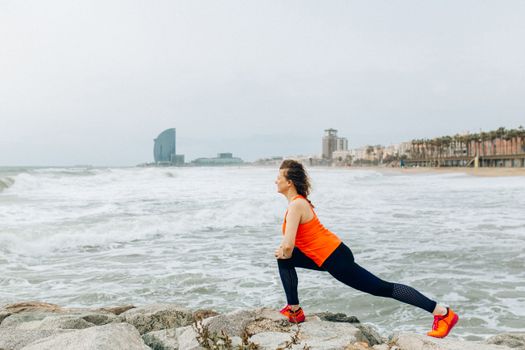
A woman stretches by the ocean in Barcelona, showcasing health and fitness by the sea. Photo: Nataliya Vaitkevich / Pexels
Choosing between car rental and public transport for your Barcelona fitness trip hinges on several factors. Here are some top tips to guide your decision and avoid common mistakes: * **Assess Your Itinerary's Geographical Scope:** If your fitness activities are primarily within Barcelona's city limits (e.g., city gyms, urban running routes, beach workouts), public transport is overwhelmingly the better choice. Its efficiency and coverage within the metropolitan area are unmatched. If, however, you plan multiple excursions to natural parks like Collserola, Montserrat, or coastal towns for hiking, cycling, or water sports, a car rental becomes significantly more practical. * **Evaluate Your Equipment Load:** Carrying a small gym bag is fine on public transport. Attempting to transport a road bike, a surfboard, or extensive climbing gear on a crowded metro or bus is not. For bulky or specialized equipment, a car provides necessary space and convenience. Consider if your rental car has a roof rack option if needed. * **Consider Your Travel Group:** Solo travelers or couples might find public transport sufficient and more economical. Larger groups or families, especially with varying mobility needs or preferences, might benefit from the comfort and shared cost of a rental car, particularly for longer distances or day trips. * **Factor in Your Driving Comfort and Experience:** Barcelona's city driving can be intense, with narrow streets, scooter traffic, and complex parking rules. If you're not comfortable with urban European driving, or if navigating unfamiliar cities is stressful for you, stick to public transport. The added stress can detract from your fitness goals and overall enjoyment. * **Budget for ALL Car-Related Expenses:** Don't just look at the daily rental rate. Add fuel costs (high in Spain), parking fees (expensive and often scarce), potential tolls, and full insurance coverage. Often, when all these are tallied, public transport emerges as the much cheaper option for city-centric travel. * **Embrace Walking and Cycling:** Regardless of your primary transport choice, Barcelona is a highly walkable and bike-friendly city. Incorporate walking or cycling into your daily routine. Many fitness enthusiasts find that simply exploring the city on foot or renting a city bike (like Bicing) contributes significantly to their daily activity levels and overall fitness on the trip. * **Utilize Public Transport Passes Effectively:** For stays of a few days, a T-Casual or Hola Barcelona Travel Card (unlimited journeys for a set period) offers excellent value. Research these options to find the best fit for your duration and frequency of travel. By carefully considering these points, you can make an informed decision that enhances your fitness journey in Barcelona, ensuring a seamless and enjoyable experience.

Comparison

FeaturePublic TransportCar RentalBest for Fitness
Cost (intra-city)Very AffordableExpensivePublic Transport
Flexibility (out-of-city)LimitedHighCar Rental
Carrying EquipmentDifficult/LimitedEasy/SpaciousCar Rental
Environmental ImpactLowHigherPublic Transport
Stress (driving/parking)LowHighPublic Transport
Incidental ExerciseHigh (walking to stops)LowPublic Transport
Time Efficiency (city)High (no traffic)Variable (traffic/parking)Public Transport
Access to Remote TrailsLowHighCar Rental

What Readers Say

"For my running trip to Barcelona, public transport was a lifesaver. I could easily get to Parc de la Ciutadella for morning runs, then quick metro rides to different gym classes without any hassle of parking. It definitely kept my stress levels low and my step count high!"

Sarah J. · Austin, TX

"We rented a car for our Barcelona trip because we wanted to hike Montserrat and explore the Costa Brava. It was perfect for carrying our hiking gear and bikes, giving us the freedom to stop at any scenic point. Worth the extra cost for the adventure!"

Mark T. · Denver, CO

"As a yoga instructor, I visited various studios across Barcelona. The metro and bus network made it incredibly simple and cheap to get around. I felt healthier just from all the walking to and from stations!"

Emily R. · Chicago, IL

"I initially considered a car but opted for public transport after researching parking. While it meant some longer walks to certain trailheads, it pushed me to explore more of the city on foot, which was a great bonus for my fitness. Just be prepared for some crowds on the metro."

David L. · Seattle, WA

"Traveling with my CrossFit equipment, a rental car was non-negotiable. It allowed me to train at different boxes outside the city center and transport my heavy gear without any issues. The flexibility for a specialized fitness trip was invaluable."

Jessica M. · Miami, FL

Frequently Asked Questions

Is public transport in Barcelona safe for solo fitness travelers?

Yes, Barcelona's public transport is generally very safe, even for solo travelers. Like any major city, it's wise to be aware of your surroundings, especially late at night, and keep an eye on your belongings to prevent pickpocketing. During the day, it's a bustling and efficient way to get around.

I'm planning many day trips for hiking. Is a car rental essential?

For extensive day trips focused on hiking in areas like Montserrat, Collserola, or the Pyrenees, a car rental offers significant advantages. It provides direct access to trailheads, flexibility with timing, and the ability to carry gear easily, which public transport options often cannot match in terms of convenience and speed.

How do I buy public transport tickets in Barcelona?

You can purchase public transport tickets from vending machines at metro stations, some tram stops, and tobacco shops (estancos). The T-Casual card is a popular choice for visitors. You can also use contactless payment directly on some buses and metro gates with your credit card.

Is car rental in Barcelona expensive for a week-long fitness trip?

Car rental can be quite expensive, especially when factoring in all costs. A week's rental might be €200-€500+, plus €100-€200 for fuel, and potentially €150-€280 for parking if you use paid garages daily. Compare this to a Hola Barcelona Travel Card for unlimited transport, which costs around €46 for 5 days.

How does car rental compare to ride-sharing apps like Uber for fitness travel in Barcelona?

Uber and similar ride-sharing services exist in Barcelona but are less prevalent and often more expensive than taxis, especially during peak hours. For short, occasional trips, they can be convenient. However, for extensive daily travel or multiple out-of-city excursions, a car rental or public transport generally offers better value and reliability for a fitness-focused itinerary.

Who should prioritize public transport for their Barcelona fitness trip?

Public transport is ideal for fitness travelers focused on urban activities like gym visits, city running, yoga studios, and exploring major attractions within Barcelona. It's also perfect for budget-conscious travelers, those who prefer not to drive in busy cities, and individuals who enjoy incorporating extra walking into their daily routine.

Are there any environmental zones I should be aware of if I rent a car in Barcelona?

Yes, Barcelona has a Low Emission Zone (ZBE) that covers most of the city. Vehicles that do not meet specific emission standards (typically older cars) are restricted from entering during certain hours, and fines apply. Most rental cars will be compliant, but it's crucial to confirm this with your rental company to avoid penalties.

What's the future trend for active travel transport in Barcelona?

Barcelona is increasingly promoting sustainable and active transport. Expect continued expansion of cycling infrastructure, improved public transport integration, and potentially stricter regulations on private vehicles in the city center. The trend is towards making the city even more accessible and enjoyable for pedestrians, cyclists, and public transport users, aligning perfectly with fitness-focused travel.

Choosing between car rental and public transport in Barcelona depends entirely on your unique fitness goals and travel style. Carefully weigh the benefits of each to ensure your active adventure is as efficient, enjoyable, and rewarding as possible. Plan smart, move well, and experience the best of Barcelona!

Topics: Car rental Barcelona vs public transportBarcelona fitness travelactive travel Barcelonatransport for fitness Barcelonahealthy travel Barcelona
Leo List
Brampton weed
Adultwork EstrelaBet Vai de Bet R7 Bet Betão Galera Bet Rainbet Bet9ja Shop SportyBet BetKing Sisal Loto Foot Hollywoodbets YesPlay Odibets RushBet Jugabet BetWarrior BetCity MSport betPawa Fortebet