How to Start Working Out at Home: Your Ultimate Guide
how to start working out at home

How to Start Working Out at Home: Your Ultimate Guide

Transform your body and mind from the comfort of your home with our expert-backed, easy-to-follow plan.

Start Your Home Fitness Journey

Key Takeaways

  • ✓ You don't need expensive equipment to get a great home workout.
  • ✓ Consistency is more crucial than intensity when starting out.
  • ✓ Even short, regular workouts yield significant health benefits.
  • ✓ Proper form prevents injury and maximizes exercise effectiveness.

How It Works

1
Define Your Goals

Before lifting a single dumbbell, clarify what you want to achieve. Whether it's weight loss, muscle gain, or better health, clear goals provide motivation and direction for your home fitness journey.

2
Prepare Your Space

Designate a clutter-free area in your home where you can move freely and safely. This could be a corner of your living room or a dedicated home gym space, ensuring you have enough room for all exercises.

3
Choose Your Program

Select a workout routine that aligns with your fitness level and goals, focusing on bodyweight exercises initially. Many free resources online offer structured plans perfect for beginners at home.

4
Commit and Track Progress

Consistency is key to seeing results and building a lasting habit. Schedule your workouts like important appointments and track your progress to stay motivated and adjust as you get stronger.

Why Choose At-Home Workouts? Exploring the Benefits
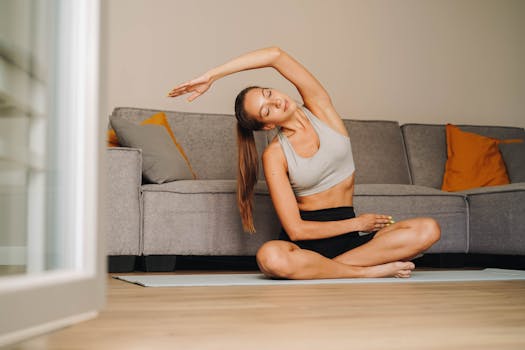
Woman practicing yoga on a mat in a cozy living room setting. Photo: olia danilevich / Pexels
Deciding to start working out at home is a significant step towards a healthier lifestyle, offering a myriad of advantages that traditional gym memberships often can't match. One of the most compelling reasons is the sheer convenience. Imagine waking up and being able to exercise without commuting, packing a bag, or waiting for equipment. This accessibility eliminates many common excuses for skipping workouts, making it easier to integrate fitness into your daily routine. You can literally roll out of bed and into your workout gear, saving precious time and energy that can be redirected towards your exercise itself. This flexibility means you can work out whenever it suits your schedule – early morning, during a lunch break, or late evening – without being bound by gym operating hours. Beyond convenience, at-home workouts offer an unparalleled level of privacy and comfort. For many, the idea of exercising in front of others at a gym can be intimidating, especially when just starting out or trying new movements. Your home provides a safe, judgment-free zone where you can focus entirely on your form and effort without feeling self-conscious. This can be particularly empowering for beginners, allowing them to build confidence and competence at their own pace. Furthermore, you have complete control over your environment. You can blast your favorite music, adjust the lighting, or even take calls during breaks – tailoring the atmosphere to your exact preferences, something impossible in a shared gym space. Cost-effectiveness is another major draw. Gym memberships, personal trainers, and specialized classes can add up quickly, becoming a significant financial burden. Starting a home workout routine, especially one centered around bodyweight exercises, can be virtually free. While you might choose to invest in some basic equipment later, the initial outlay is minimal to non-existent. This financial freedom allows you to allocate resources elsewhere or simply save money while still prioritizing your health. Moreover, the lack of a commute also saves on gas or public transport costs, adding another layer of economic benefit. Finally, home workouts foster a sense of self-reliance and discipline. Without the external pressure of a gym environment or a trainer's direct supervision, you become solely responsible for your motivation and adherence. This cultivates strong internal discipline that can translate into other areas of your life. You learn to listen to your body, understand your limits, and push yourself when necessary, developing a deeper connection with your physical capabilities. The freedom to design your own fitness journey, choose your exercises, and set your own pace empowers you to take ownership of your health in a profound way. This holistic approach not only builds physical strength but also mental fortitude, making at-home fitness a truly transformative experience.

Setting Up Your Home Workout Space and Essential Gear
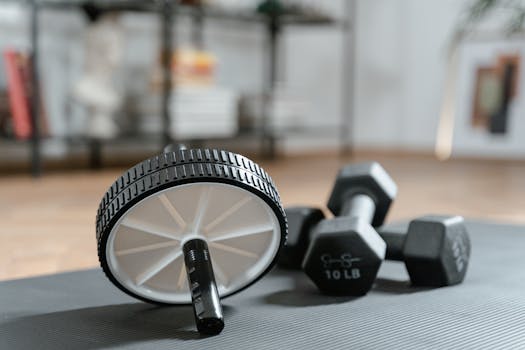
Ab roller and dumbbells on yoga mat, perfect for a home workout routine and healthy lifestyle. Photo: MART PRODUCTION / Pexels
Successfully starting to work out at home hinges significantly on creating an environment conducive to exercise. This doesn't mean you need a dedicated, fully-equipped home gym, but rather a functional space that allows for safe and effective movement. The first step is to identify an area in your home that offers sufficient clear space. Look for a spot where you can extend your arms and legs fully without hitting furniture or walls. A living room corner, a spare bedroom, or even a patio can work. Ensure the floor is appropriate – carpets are fine for many exercises, but a mat might be beneficial for harder surfaces or for exercises requiring more cushioning. Remove any potential tripping hazards like rugs, loose cables, or small items that could get in the way during dynamic movements. Ventilation and lighting are often overlooked but crucial elements. A well-ventilated space helps regulate body temperature and makes your workout more comfortable, especially during intense sessions. If possible, choose an area with natural light, as it can boost mood and energy. If natural light isn't an option, ensure the artificial lighting is bright enough to prevent shadows that might obscure your form. Music can be a powerful motivator, so consider having a speaker nearby to play your favorite workout playlist. Hydration is also key; always have a water bottle within reach to stay properly hydrated throughout your session. When it comes to essential gear, the beauty of at-home workouts, especially for beginners, is how little you truly need. You can achieve a highly effective workout with just your body weight. Exercises like squats, lunges, push-ups, planks, and burpees are incredibly versatile and require no equipment whatsoever. These movements form the foundation of many fitness programs and are excellent for building strength, endurance, and flexibility. As you progress, you might consider a few affordable additions to enhance your routine. A good quality yoga or exercise mat is often the first purchase. It provides cushioning for floor exercises, protects your joints, and defines your workout space. Resistance bands are another highly versatile and inexpensive option. They come in various strengths and can be used to add resistance to bodyweight exercises, assist with stretching, or target specific muscle groups for strength training. A jump rope is fantastic for cardio and improving coordination, offering a high-intensity workout in a small footprint. For those looking to add a bit more challenge, a set of light dumbbells (3-10 lbs) can significantly expand your exercise repertoire. Remember, the goal is to start simple and gradually build up your equipment as your needs and budget allow. Don't let the lack of fancy gear be an excuse; your body is the most powerful piece of equipment you own.

Crafting Your Beginner-Friendly Home Workout Plan
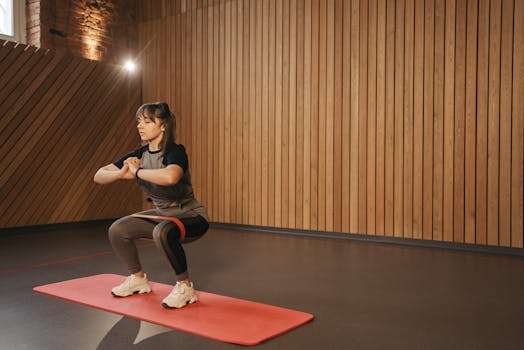
Young woman exercises indoors with resistance band on mat for fitness Photo: Pavel Danilyuk / Pexels
Once your space is ready and you understand the benefits, the next critical step is to craft a workout plan that's both effective and sustainable for a beginner. The key here is progression – starting slowly and gradually increasing intensity or duration as your strength and stamina improve. A well-rounded beginner plan should incorporate elements of cardiovascular fitness, strength training, and flexibility. Aim for consistency over intensity, especially in the initial weeks. Three to four workout sessions per week, lasting 20-30 minutes each, is a great starting point, allowing adequate rest and recovery time for your body. For cardiovascular fitness, bodyweight exercises that elevate your heart rate are perfect. Consider activities like marching in place, jumping jacks (modified or full), high knees, or shadow boxing. Start with 30-60 seconds of each exercise, followed by a short rest, and repeat for 2-3 rounds. As you get fitter, you can increase the duration of each exercise or reduce the rest time. Incorporating short bursts of cardio into your strength routine can also be an efficient way to get your heart pumping. Remember, the goal is to feel challenged but not completely exhausted. Strength training is crucial for building muscle, improving metabolism, and enhancing overall body function. For beginners working out at home, bodyweight exercises are your best friends. Focus on compound movements that work multiple muscle groups simultaneously. Classic examples include squats (chair squats if full squats are too challenging initially), lunges (forward or reverse), push-ups (knee push-ups or against a wall), planks (on knees or toes), and glute bridges. Aim for 2-3 sets of 8-12 repetitions for each exercise, ensuring proper form is maintained throughout. If you can easily complete 12 reps with good form, it's time to consider increasing the challenge – either by slowing down the movement, adding more reps/sets, or progressing to a harder variation of the exercise. For instance, moving from knee push-ups to full push-ups. Flexibility and mobility exercises are often overlooked but are vital for injury prevention, improving range of motion, and reducing muscle soreness. Incorporate a 5-10 minute warm-up before your workout, consisting of dynamic stretches like arm circles, leg swings, and torso twists. After your strength and cardio, dedicate another 5-10 minutes to static stretching, holding each stretch for 20-30 seconds. Focus on major muscle groups like hamstrings, quadriceps, chest, and back. Resources like free online yoga or stretching videos can be incredibly helpful for learning proper techniques. Websites like YouTube offer a vast library of beginner-friendly workout routines and instructional videos. Always remember to listen to your body and modify exercises as needed. It's not about being perfect from day one, but about building a sustainable and effective routine that helps you achieve your goals safely.

Common Mistakes to Avoid and Tips for Staying Motivated
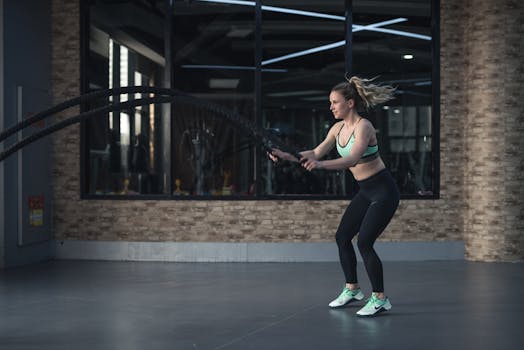
Focused woman performing CrossFit rope training indoors, demonstrating strength and endurance. Photo: Li Sun / Pexels
Embarking on a home workout journey is exciting, but it's also easy to fall into common traps that can derail your progress or lead to injury. Being aware of these pitfalls and understanding how to circumvent them is crucial for long-term success. One of the most frequent mistakes beginners make is trying to do too much, too soon. It's tempting to jump into high-intensity workouts or long sessions, but this often leads to burnout, excessive soreness, or injury. Instead, adopt a progressive approach: start with manageable workouts and gradually increase duration, intensity, or resistance as your body adapts. Listen to your body and respect its signals for rest and recovery. Another critical error is neglecting proper form. Without a trainer physically present, it's easy to compromise form for the sake of completing reps. Poor form not only reduces the effectiveness of an exercise but significantly increases the risk of injury. Utilize mirrors, record yourself, or watch instructional videos to ensure you're performing movements correctly. Prioritize quality over quantity; it's better to do fewer reps with perfect form than many with sloppy execution. Don't be afraid to modify exercises to suit your current strength level – for example, performing push-ups on your knees or against a wall before attempting full push-ups. Lack of variety is another common pitfall. Doing the same exercises every day can lead to plateaus, boredom, and imbalances in muscle development. While consistency is key, variety keeps things interesting and challenges your body in new ways. Incorporate different types of exercises (cardio, strength, flexibility), experiment with different bodyweight movements, or explore online workout programs that offer diverse routines. This keeps your muscles guessing and prevents monotony. For staying motivated, consistency is your greatest ally. Treat your workouts like non-negotiable appointments in your schedule. Even on days you don't feel like it, commit to a shorter, lighter session rather than skipping entirely. Small efforts add up. Setting realistic, achievable goals and celebrating small victories along the way can also provide powerful motivation. Track your progress – whether it's by noting down reps, sets, or how you feel – to see how far you've come. This tangible evidence of improvement is incredibly encouraging. Creating a dedicated workout playlist can significantly boost your energy and make workouts more enjoyable. Consider finding an accountability partner, even if you're working out alone at home. Sharing your goals and progress with a friend or family member can provide external motivation and support. Finally, remember your 'why.' Reconnecting with the initial reasons you decided to start working out at home – be it for health, energy, or confidence – can reignite your drive on days when motivation wanes. Make fitness a positive, empowering part of your life, not a chore. **Tips for Sustained Motivation:** * **Set SMART Goals:** Specific, Measurable, Achievable, Relevant, Time-bound. * **Create a Routine:** Work out at the same time each day to build a habit. * **Track Progress:** Use a journal or app to record your workouts and improvements. * **Reward Yourself:** Acknowledge milestones with non-food rewards. * **Find Your Tribe:** Join online communities or challenge groups for support. * **Mix It Up:** Introduce new exercises or routines regularly to prevent boredom. * **Prioritize Recovery:** Don't underestimate the importance of rest days and sleep.

Comparison

FeatureHome WorkoutGym MembershipPersonal Trainer
CostLow to NoneModerate to HighHigh
FlexibilityExcellentGood (limited by hours)Limited (by schedule)
PrivacyExcellentLowGood
Equipment NeededMinimal/NoneExtensiveNone (provided)
Expert GuidanceSelf-driven/OnlineSome/ClassesExtensive (1-on-1)
Convenience
Variety of Exercise✓ (with planning)

What Readers Say

"This guide truly helped me figure out how to start working out at home. I was overwhelmed by all the information online, but this broke it down into simple, actionable steps. My living room is now my favorite gym!"

Sarah J. · Austin, TX

"I used to dread going to the gym. Following these tips on how to start working out at home has transformed my routine. I feel more confident and consistent, and I love the privacy."

Mark D. · Chicago, IL

"After 3 months of following this guide, I've lost 15 pounds and feel stronger than ever! Learning how to start working out at home was the best decision for my health and my wallet."

Emily R. · Seattle, WA

"The advice on setting up a home space was invaluable. I still miss some of the gym equipment, but for a beginner, this is an excellent roadmap for how to start working out at home effectively."

David L. · Miami, FL

"As a busy mom, finding time for fitness was impossible. This guide on how to start working out at home showed me how to fit powerful workouts into my chaotic schedule. Truly life-changing!"

Jessica M. · Denver, CO

Frequently Asked Questions

What is the best way to start working out at home for a complete beginner?

For complete beginners, the best approach is to start with bodyweight exercises focusing on fundamental movements like squats, lunges, push-ups (modified), and planks. Begin with short sessions (15-20 minutes) 3-4 times a week, prioritizing proper form over intensity, and gradually increase duration or add resistance as you get stronger.

Do I need to buy expensive equipment to start working out at home?

Absolutely not. You can achieve a highly effective workout with just your body weight. While items like a yoga mat, resistance bands, or light dumbbells can enhance your routine later on, they are not necessary to begin your home fitness journey.

How do I create a workout routine when I'm just starting at home?

Start by identifying your goals (e.g., weight loss, strength). Then, choose 5-7 bodyweight exercises targeting major muscle groups. Perform 2-3 sets of 8-12 repetitions for each, with a 30-60 second rest between sets. Include a 5-minute warm-up and cool-down. Many free online resources and apps offer beginner-friendly routines.

Is working out at home as effective as going to a gym?

Yes, working out at home can be just as effective as a gym, especially for beginners and intermediate fitness levels. The key is consistency, proper exercise selection, and progressive overload (gradually increasing challenge). While gyms offer more specialized equipment, bodyweight and minimal equipment home workouts can build significant strength, endurance, and flexibility.

How can I stay motivated to work out at home consistently?

To stay motivated, set realistic goals, create a consistent schedule, and track your progress. Find an accountability partner, vary your workouts to prevent boredom, and reward yourself for milestones. Remember your 'why' and focus on how good you feel after a workout to build a positive association.

Who should consider starting to work out at home?

Anyone looking for a flexible, cost-effective, and private way to improve their fitness should consider working out at home. It's ideal for busy individuals, those new to exercise, or people who prefer the comfort and convenience of their own space over a traditional gym environment.

What are the common safety concerns for home workouts?

Safety concerns include improper form leading to injury, tripping hazards in your workout space, and overexertion. Always ensure your space is clear, wear appropriate footwear, warm up adequately, and listen to your body. If you experience sharp pain, stop immediately and consult a professional.

Will at-home workouts prepare me for more advanced fitness goals?

Absolutely. Home workouts provide an excellent foundation of strength, endurance, and body awareness that is crucial for any advanced fitness goal. As you progress, you can increase intensity, duration, incorporate more challenging bodyweight variations, or gradually introduce minimal equipment to continue advancing towards your objectives.

Ready to take control of your fitness journey? This comprehensive guide has equipped you with everything you need to know about how to start working out at home successfully. Embrace the convenience, privacy, and effectiveness of home-based fitness and begin building a stronger, healthier you today.

Topics: how to start working out at homehome workout planbeginner home exerciseat-home fitnessworkout without equipment
Leo List
Brampton weed
Adultwork EstrelaBet Vai de Bet R7 Bet Betão Galera Bet Rainbet Bet9ja Shop SportyBet BetKing Sisal Loto Foot Hollywoodbets YesPlay Odibets RushBet Jugabet BetWarrior BetCity MSport betPawa Fortebet