✓ Squats are fundamental for lower body strength and overall fitness.
✓ There are dozens of squat variations, each targeting muscles differently.
✓ Proper form is crucial for effectiveness and injury prevention.
✓ Squats can be scaled for beginners to advanced lifters.
How It Works
1
Understand the Basics
Before exploring variations, master the foundational squat movement. Focus on depth, knee tracking, and back posture to build a strong base.
2
Identify Your Goals
Determine if you're aiming for strength, hypertrophy, endurance, or rehabilitation. Your goals will guide which squat types are most beneficial for you.
3
Explore Variations
Experiment with different squat types, from bodyweight to weighted, front-loaded to back-loaded. Pay attention to how each variation feels and which muscles are activated.
4
Integrate into Your Routine
Strategically incorporate chosen squat variations into your weekly workout plan. Progress gradually, focusing on form before increasing weight or reps.
Unpacking the Fundamentals of Squatting Mechanics
Photo: Ketut Subiyanto / Pexels
The squat, in its purest form, is a primal human movement pattern, essential for daily activities like sitting, standing, and lifting. Beyond its functional applications, it stands as a cornerstone exercise in fitness routines worldwide, celebrated for its unparalleled ability to build lower body strength, muscle mass, and improve mobility. To truly grasp what are the different types of squats, we must first understand the fundamental mechanics that underpin every variation. At its core, a squat involves lowering your hips from a standing position and then standing back up. This seemingly simple action engages a complex network of muscles, primarily the quadriceps, hamstrings, glutes, and core stabilizers.
Proper squat mechanics begin with a stable base. Feet are typically positioned shoulder-width apart, with toes pointed slightly outward (around 10-30 degrees, depending on individual anatomy and comfort). As you initiate the descent, imagine sitting back into a chair, pushing your hips back first. Your knees should track in line with your toes, avoiding inward collapse (valgus collapse) or excessive outward flare. The chest should remain upright, and the spine neutral, preventing rounding of the lower back. Depth is another critical factor; ideally, you want to achieve a depth where your hip crease is below the top of your knees, often referred to as 'ass-to-grass' (ATG) for maximal muscle activation and range of motion, though partial squats also have their place. However, achieving full depth should never compromise form or cause pain. The ascent mirrors the descent, driving through the heels and midfoot, squeezing the glutes at the top to complete the movement.
Understanding these foundational principles is paramount because each squat variation, regardless of added weight, equipment, or stance, builds upon this basic framework. Deviations from proper form can not only diminish the exercise's effectiveness but also increase the risk of injury, particularly to the knees and lower back. For instance, if your knees consistently cave inward, you might be over-relying on your quads and neglecting your glute medius, indicating a potential weakness or mobility issue that needs addressing. Conversely, if you struggle to maintain an upright torso, it could point to ankle mobility limitations or a weak core. Mastering the bodyweight squat is often the first step in a progressive journey toward more complex and loaded variations, ensuring that the movement pattern is ingrained correctly before external resistance is introduced. This foundational understanding is what truly unlocks the potential of the myriad squat types and allows you to tailor your training for optimal results and longevity in your fitness journey. For more on foundational movements, explore essential strength training exercises.
Bodyweight and Fundamental Squat Variations for Every Level
Photo: Miguel González / Pexels
When exploring what are the different types of squats, it's crucial to start with bodyweight and fundamental variations. These are not just for beginners; they serve as excellent warm-ups, form drills, and conditioning tools for lifters of all experience levels. The **Bodyweight Squat** is the absolute starting point. It requires no equipment and focuses purely on mastering the movement pattern. Stand with feet shoulder-width apart, toes slightly out. Keep your chest up, brace your core, and push your hips back and down, as if sitting in a chair. Aim for thighs parallel to the floor or deeper if mobility allows, then drive back up through your heels. This variation is invaluable for identifying and correcting any mobility restrictions or muscular imbalances before adding external load.
Building upon the bodyweight squat, the **Goblet Squat** introduces a light external load, typically a dumbbell or kettlebell held against the chest. This front-loaded position naturally encourages a more upright torso, making it an excellent teaching tool for maintaining good posture during the squat. The weight acts as a counterbalance, often allowing individuals to achieve greater depth with better form than they might with a barbell. Hold the weight vertically with both hands, elbows tucked in, and perform the squat as described for the bodyweight version. The Goblet Squat is fantastic for strengthening the core and improving hip mobility, serving as a bridge between bodyweight and more advanced barbell squats.
Another highly effective fundamental variation is the **Sumo Squat**. This squat differs significantly in stance, with feet positioned much wider than shoulder-width and toes pointed further outward (45 degrees or more). This wider stance places a greater emphasis on the adductors (inner thighs) and glutes, while often being more forgiving on the lower back and knees for individuals with certain mobility limitations. The movement pattern remains similar: push hips back and down, keeping the chest up and knees tracking over toes. Sumo squats can be performed bodyweight, with a kettlebell (Sumo Goblet Squat), or with a dumbbell held between the legs. The unique muscle activation makes it a powerful tool for developing comprehensive lower body strength and shaping the glutes.
Finally, the **Box Squat** is a fantastic variation for teaching depth, reinforcing proper hip hinge mechanics, and building explosive power. As the name suggests, you squat down until your glutes lightly touch a box or bench behind you, then stand back up. The box provides a target, ensuring consistent depth, and allows for a brief pause at the bottom, which can help eliminate the stretch reflex and force greater muscular effort on the ascent. This can be performed bodyweight, with a goblet hold, or with a barbell on the back. The Box Squat is particularly useful for athletes looking to improve their starting strength out of the hole, and for individuals learning to control their descent. These foundational squats form the bedrock of a robust leg training program, preparing your body for the increased demands of loaded barbell variations and ensuring a balanced development of your lower body musculature.
Advanced Barbell and Unconventional Squat Techniques
Photo: Leon Mart / Pexels
Once the foundational squat patterns are mastered, the world of advanced barbell and unconventional squat techniques opens up, offering pathways to significantly greater strength, power, and muscle hypertrophy. Among the most iconic and powerful, the **Barbell Back Squat** reigns supreme. This variation involves placing a barbell across the upper back (high bar position) or rear deltoids (low bar position). The back squat allows for the heaviest loads to be lifted, making it a primary driver for overall lower body and systemic strength. It intensely targets the quadriceps, glutes, hamstrings, and the entire posterior chain, while demanding significant core stability. Proper setup involves bracing the core, retracting the shoulder blades to create a 'shelf' for the bar, and maintaining a neutral spine throughout the movement. The depth, as with all squats, is critical, aiming for at least parallel to maximize muscle engagement. The back squat is a cornerstone of powerlifting and strength training, celebrated for its ability to build raw power and mass. For more on advanced lifting, check out advanced weightlifting techniques.
In contrast, the **Barbell Front Squat** places the barbell across the front of the shoulders, resting on the clavicles and deltoids, typically with an open-hand 'clean grip' or a cross-arm grip. This position forces a much more upright torso throughout the lift, challenging core strength and upper back stability to a far greater extent than the back squat. Because of the upright posture, the front squat places a greater emphasis on the quadriceps and is often considered a safer option for individuals with lower back issues, as it reduces shear forces on the spine. While you can typically lift less weight than with a back squat, the front squat's unique demands make it an invaluable tool for athletes, particularly those involved in Olympic weightlifting, and anyone looking to improve core strength and quad development.
Beyond barbells, **Overhead Squats** represent one of the most challenging and comprehensive squat variations. This exercise involves squatting with a barbell held overhead with straight arms, requiring extreme mobility in the shoulders, thoracic spine, and hips, alongside exceptional core stability. It's a full-body movement that demands coordination, balance, and significant strength to execute correctly. The overhead squat is an incredible diagnostic tool for identifying mobility limitations and is a staple in CrossFit and Olympic weightlifting training, serving as a critical component of the snatch lift. It enhances proprioception and strengthens the stabilizing muscles throughout the entire kinetic chain.
Finally, unconventional variations like the **Pistol Squat** (single-leg squat) push the boundaries of strength, balance, and mobility. Performed on one leg, with the other extended forward, the pistol squat requires immense unilateral leg strength, ankle mobility, and core control. It's a formidable bodyweight exercise that builds incredible functional strength and addresses muscular imbalances between legs. Similarly, **Bulgarian Split Squats**, while not a true 'squat' in the bilateral sense, are an advanced unilateral exercise where the back foot is elevated on a bench, significantly increasing the load and challenge on the working leg. These advanced and unconventional squat types are not merely about lifting heavier; they are about refining movement, enhancing athleticism, and building a truly resilient and powerful lower body.
Optimizing Your Squat Training: Tips, Common Mistakes, and Progression
Optimizing your squat training is a continuous journey that involves meticulous attention to form, strategic programming, and an understanding of common pitfalls. Mastering what are the different types of squats means not just knowing them, but executing them effectively and safely. Here are essential tips, common mistakes to avoid, and guidance on progressive overload:
**Tips for Optimal Squat Performance:**
* **Warm-up Thoroughly:** Incorporate dynamic stretches focusing on hip mobility, ankle flexibility, and glute activation (e.g., leg swings, hip circles, glute bridges). A proper warm-up prepares your joints and muscles for the demands of squatting.
* **Brace Your Core:** Before descending, take a deep breath into your belly and brace your abdominal muscles as if preparing for a punch. This creates intra-abdominal pressure, stabilizing your spine and protecting your lower back.
* **Focus on Depth:** Aim for at least parallel depth (hip crease below knee) if your mobility allows. Deeper squats generally recruit more muscle fibers, particularly in the glutes and hamstrings.
* **Control the Eccentric:** Don't just drop into the squat. Control the descent (the lowering phase) for 2-3 seconds. This builds strength and improves muscle control.
* **Drive Through the Midfoot/Heels:** While your whole foot should be grounded, focus on driving through your midfoot and heels on the ascent. This helps activate the posterior chain more effectively.
* **Record and Review:** Film yourself occasionally from the side and front. This objective feedback can highlight form flaws you might not feel.
**Common Squat Mistakes to Avoid:**
* **Knee Valgus (Knees Caving In):** This is a very common and potentially harmful mistake. It often indicates weak glute medius muscles or poor hip control. Focus on actively pushing your knees out, in line with your toes.
* **Rounding of the Lower Back (Butt Wink):** This occurs at the bottom of the squat when the pelvis tucks under, causing the lower back to round. It can stress the lumbar spine. Often caused by tight hamstrings, poor ankle mobility, or insufficient core bracing. Work on mobility and ensure proper hip hinge.
* **Lifting the Heels:** If your heels lift off the floor, it's a sign of poor ankle mobility or insufficient hip mobility. Try elevating your heels slightly with weight plates or wearing squat shoes, and work on ankle dorsiflexion.
* **Excessive Forward Lean:** While some forward lean is natural, an excessive lean, especially in back squats, can shift the load onto the lower back. This might be due to weak core, tight ankles, or improper bar placement.
* **Not Bracing the Core:** A weak or unbraced core compromises spinal stability, increasing injury risk and reducing power transfer.
**Progressive Overload in Squats:**
To continually get stronger and build muscle, you must progressively overload your squats. This can be achieved in several ways:
* **Increase Weight:** The most straightforward method – gradually lift heavier loads while maintaining good form.
* **Increase Repetitions:** Perform more reps with the same weight.
* **Increase Sets:** Do more sets of the same exercise.
* **Decrease Rest Time:** Shorten the rest periods between sets.
* **Improve Form/Depth:** Achieving better depth or cleaner form with the same weight is a form of progression.
* **Introduce More Challenging Variations:** Transition from bodyweight to goblet squats, then front squats, then back squats, or incorporate single-leg variations. Always prioritize form over ego to ensure long-term progress and injury prevention.
Comparison
Feature
Barbell Back Squat
Barbell Front Squat
Goblet Squat
Primary Muscle Emphasis
Quads, Glutes, Hamstrings, Posterior Chain
Quads, Core, Upper Back
Quads, Glutes, Core
Load Potential
Highest
Moderate-High
Low-Moderate
Required Mobility (Hips/Ankles)
Moderate
High
Moderate
Required Mobility (Shoulders/T-Spine)
Moderate
High
Low
Ease of Learning
Moderate
Hard
Easy
Core Engagement
High
Very High
High
Injury Risk (Lower Back)
Moderate (if form poor)
Low (if form good)
Low
What Readers Say
★★★★★
"This article completely changed how I view squats! Understanding what are the different types of squats helped me pick variations that addressed my weaknesses, and my leg strength has skyrocketed."
Sarah J. · Austin, TX
★★★★★
"As a beginner, I was intimidated by squats, but the breakdown of bodyweight and goblet squats made it so approachable. My form is so much better now."
Mark D. · Chicago, IL
★★★★★
"I've been lifting for years, but the section on advanced squats and common mistakes provided crucial insights. My back squat numbers have gone up by 20 lbs since applying these tips!"
Jessica L. · Denver, CO
★★★★★
"Good overview of the different types of squats. I wish there were a few more specific programs for each type, but the information provided is solid and very helpful for understanding the nuances."
David R. · Miami, FL
★★★★★
"The detailed explanations of how each squat variation targets different muscles were exactly what I needed. I feel more confident and knowledgeable in my gym sessions now."
Emily P. · Seattle, WA
Frequently Asked Questions
What is the best type of squat for building glutes?
For maximizing glute activation, variations like the Sumo Squat, Goblet Squat (especially with a deep squat), and Barbell Back Squat (with a low bar position and focus on hip drive) are highly effective. Bulgarian Split Squats and Glute-Focused Box Squats also provide excellent glute engagement due to the increased range of motion and unilateral challenge.
Are squats bad for your knees?
No, squats are not inherently bad for your knees when performed with proper form. In fact, they can strengthen the muscles around the knee joint and improve joint stability. Knee pain typically arises from improper form, excessive weight, or pre-existing conditions. Focus on knee tracking over toes and maintaining good depth without pain.
How often should I squat in my workout routine?
The frequency of squatting depends on your training goals, recovery capacity, and overall program. For most individuals, squatting 2-3 times per week is effective for strength and muscle growth. Beginners might start with 1-2 times, while advanced lifters doing high-volume training might even squat more frequently with varied intensities.
What's the difference between a high bar and low bar back squat?
The main difference lies in bar placement and its effect on body mechanics. High bar places the bar higher on the traps, encouraging a more upright torso and greater quad activation. Low bar places the bar lower on the rear deltoids, allowing for more hip hinge, often enabling heavier lifts, and emphasizing the posterior chain (glutes and hamstrings) more.
Can I get strong legs without heavy barbell squats?
Absolutely! While heavy barbell squats are excellent, you can build very strong legs using a variety of other squat types. Dumbbell squats (goblet, front), kettlebell squats, pistol squats, and Bulgarian split squats offer significant challenges and can lead to impressive strength and hypertrophy, especially when progressive overload principles are applied.
Who should avoid certain types of squats?
Individuals with significant lower back pain might need to avoid heavy barbell back squats and opt for front-loaded or bodyweight variations. Those with severe knee issues might need to modify depth or choose leg press alternatives. People with shoulder mobility limitations may struggle with front squats or overhead squats until their mobility improves. Always consult a healthcare professional or qualified coach if you have concerns.
What are common signs of bad squat form?
Common signs of bad squat form include knees caving inward (valgus collapse), excessive rounding of the lower back (butt wink), heels lifting off the ground, an inability to reach parallel depth without pain, or significant forward lean with the torso. Any sharp pain during the movement is also a clear indicator to stop and reassess your form.
Are there squat variations for improving athletic performance?
Yes, many squat variations are excellent for athletic performance. Box squats (especially with a pause or for explosive reps), jump squats (bodyweight or weighted), and overhead squats develop power, balance, and coordination crucial for sports. Front squats are also highly valued for their carryover to Olympic lifts and overall athleticism.
Now that you've explored what are the different types of squats, it's time to put this knowledge into action. Choose the variations that align with your fitness goals, focus on impeccable form, and progressively challenge yourself to build the strong, resilient lower body you've always wanted. Start squatting smarter today!

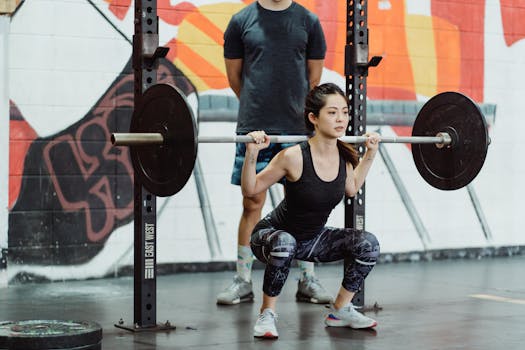 Photo: Ketut Subiyanto / Pexels
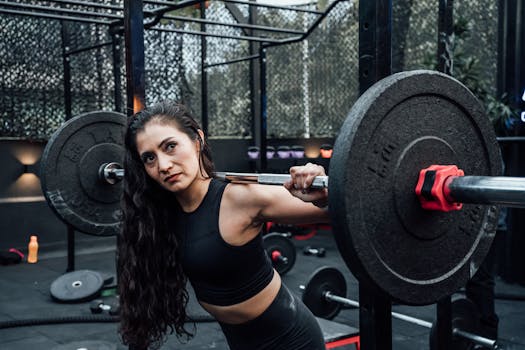 Photo: Miguel González / Pexels
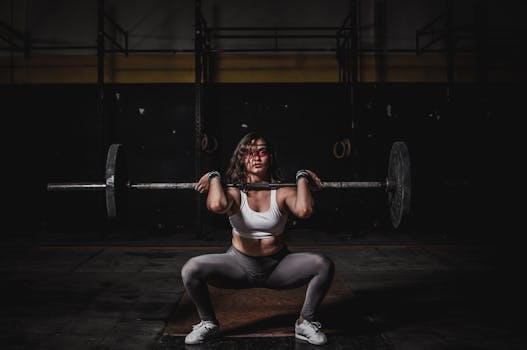 Photo: Leon Mart / Pexels