Your Ultimate Beginner Full Body Workout Plan
beginner full body workout plan

Your Ultimate Beginner Full Body Workout Plan

Unlock your potential with a simple, effective full-body routine designed to build strength and confidence from day one.

Start Your Journey Today!

Key Takeaways

  • ✓ Full body workouts are efficient, targeting all major muscle groups in one session.
  • ✓ Consistency is more important than intensity when starting a new workout plan.
  • ✓ Proper form prevents injuries and maximizes muscle engagement.
  • ✓ A beginner full body workout plan typically involves 2-3 sessions per week.

How It Works

1
Understand the Basics

Familiarize yourself with fundamental exercises and why full-body training is ideal for beginners. This foundational knowledge sets you up for success and safer execution.

2
Structure Your Week

Learn how to effectively schedule your workouts, incorporating rest days for optimal recovery and muscle growth. A balanced schedule prevents overtraining and burnout.

3
Master Each Movement

Focus on proper technique for every exercise before increasing weight or repetitions. Correct form ensures you're targeting the right muscles and avoiding injury.

4
Progress & Adapt

Discover how to gradually increase the challenge as you get stronger, preventing plateaus and keeping your progress consistent. Listen to your body and adjust as needed.

Why a Beginner Full Body Workout Plan is Your Best Starting Point

Two women stretching and dancing in a bright studio, reflecting in mirrors. Photo: MART PRODUCTION / Pexels
Embarking on a fitness journey can feel overwhelming, with countless workout styles and advice flooding the internet. For absolute beginners, however, a 'beginner full body workout plan' stands out as the most effective and sustainable approach. Why? Because it’s designed to hit all major muscle groups in a single session, typically 2-3 times per week, allowing for ample recovery time between workouts. This approach is incredibly efficient, helping you build foundational strength, improve muscular endurance, and enhance overall fitness without overtraining any specific muscle group. Unlike split routines that focus on one or two muscle groups per day, a full body workout ensures that your entire body gets stimulated regularly. This frequent stimulation is crucial for neurological adaptations and muscle memory development, which are vital in the early stages of strength training. It also means you don't have to spend hours in the gym every day; a few well-structured sessions per week can yield significant results. Furthermore, full body workouts often incorporate compound exercises – movements that involve multiple joints and muscle groups – like squats, push-ups, and rows. These exercises are not only time-efficient but also highly effective for building functional strength that translates into daily life activities. They teach your body to move as a cohesive unit, improving coordination and balance. Another significant advantage for beginners is the reduced risk of imbalances. By working all muscle groups evenly, you prevent overdeveloping one area while neglecting another, which can lead to postural issues or injuries down the line. It's a holistic approach that builds a strong, balanced physique from the ground up. Plus, the flexibility of a full body routine means if you miss a session, you haven't missed working an entire muscle group for the week; you simply pick up where you left off. This makes it a very forgiving and adaptable plan, perfect for those who are just integrating fitness into their busy lives. For more on building a sustainable routine, check out our guide on how to create a consistent workout schedule.

Designing Your First Beginner Full Body Workout Plan: Key Principles
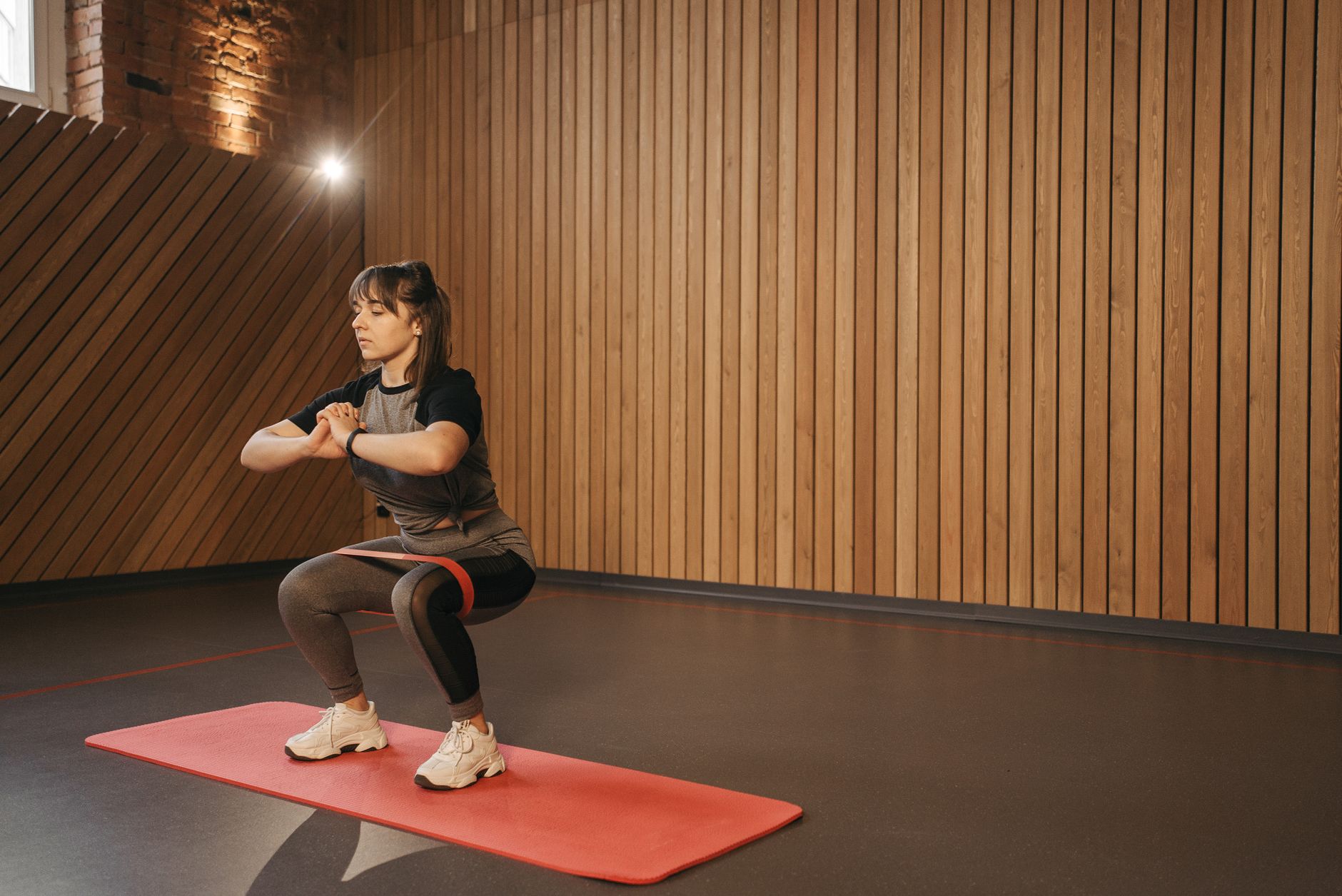
Young woman exercises indoors with resistance band on mat for fitness Photo: Pavel Danilyuk / Pexels
Crafting an effective 'beginner full body workout plan' doesn't have to be complicated. The core principles revolve around simplicity, progression, and proper form. First, focus on compound movements that recruit multiple muscle groups. These are your biggest bang-for-your-buck exercises. Think squats, lunges, push-ups, rows, and overhead presses. For beginners, it's often best to start with bodyweight versions of these exercises or use light weights to perfect your form before increasing the load. The goal isn't to lift heavy initially, but to move well. Secondly, consistency trumps intensity. Aim for 2-3 full body workouts per week, with at least one rest day in between each session. This allows your muscles to recover and grow stronger. For example, you might train on Monday, Wednesday, and Friday, leaving Tuesday, Thursday, Saturday, and Sunday for rest or light activity like walking. This frequency provides enough stimulus for adaptation without overworking your body. Each workout session should ideally last between 45-60 minutes, including a warm-up and cool-down. The warm-up should consist of light cardio and dynamic stretches to prepare your body for movement, while the cool-down should involve static stretches to improve flexibility and aid recovery. Thirdly, progressive overload is the engine of progress. As you get stronger, your body adapts, and the same exercises will no longer be as challenging. To continue making gains, you need to gradually increase the demand on your muscles. For beginners, this often means increasing the number of repetitions (reps) or sets, or reducing rest times. Once you can comfortably perform 10-12 reps with good form, you can consider increasing the weight or moving to a more challenging variation of the exercise. Always prioritize form over lifting heavier. If your form breaks down, you're not only risking injury but also failing to effectively target the intended muscles. Listening to your body is paramount; some days you might feel stronger, others less so. Adjust your workout accordingly.

Example Beginner Full Body Workout Plan (Gym & Home Options)

Young woman exercises indoors with resistance band on mat for fitness Photo: Pavel Danilyuk / Pexels
To give you a concrete starting point, here’s an example 'beginner full body workout plan' that you can adapt for either a gym setting or a home workout. Remember to always perform a 5-10 minute warm-up (e.g., jumping jacks, arm circles, leg swings) before starting and a 5-10 minute cool-down (static stretches) afterward. Aim for 2-3 sets of 8-12 repetitions for each exercise, with 60-90 seconds rest between sets. **Gym-Based Beginner Full Body Workout:** 1. **Barbell Squats (or Goblet Squats):** Focus on depth and keeping your chest up. If barbells are intimidating, start with goblet squats holding a dumbbell. 2. **Dumbbell Bench Press (or Machine Chest Press):** Lie on a flat bench, pressing dumbbells upwards. Alternatively, use a chest press machine for stability. 3. **Lat Pulldowns (or Assisted Pull-ups):** Target your back muscles. If a lat pulldown machine isn't available, try assisted pull-ups or dumbbell rows. 4. **Dumbbell Shoulder Press (or Machine Shoulder Press):** Press dumbbells overhead from a seated or standing position. A machine offers more support. 5. **Plank:** Hold a straight line from head to heels, engaging your core. Start with 30 seconds and gradually increase. 6. **Glute Bridges:** Lie on your back, knees bent, feet flat. Lift your hips off the ground, squeezing your glutes at the top. **Home-Based Beginner Full Body Workout (Bodyweight & Minimal Equipment):** 1. **Bodyweight Squats:** Stand with feet shoulder-width apart, lower your hips as if sitting in a chair. 2. **Push-ups (on knees or incline):** Start on your knees or with your hands on an elevated surface (like a table or wall) to make it easier. Progress to full push-ups. 3. **Dumbbell Rows (or Bent-Over Rows with resistance band):** If you have dumbbells, hinge at your hips and pull the weight towards your chest. Without dumbbells, use a resistance band anchored to a stable object. 4. **Pike Push-ups (or Wall Handstands):** A great bodyweight option for shoulder engagement. Form a 'V' shape with your body and push your head towards the floor. For easier, push against a wall. 5. **Plank:** As above, hold for time. 6. **Reverse Lunges:** Step one leg back, lowering your hips until both knees are bent at 90 degrees. Alternate legs. Remember, consistency is key. Don't be afraid to modify exercises to suit your current fitness level. For more advanced techniques, explore our guide on progressing your strength training.

Avoiding Common Pitfalls & Maximizing Your Beginner Full Body Workout Plan

Top view of fitness accessories including yoga mat, shoes, water bottle, and smartphone on pink wood. Photo: Towfiqu barbhuiya / Pexels
Starting a new 'beginner full body workout plan' is exciting, but it's also easy to fall into common traps that can hinder progress or lead to injury. Being aware of these pitfalls can help you navigate your fitness journey more smoothly and effectively. **Common Pitfalls to Avoid:** * **Skipping Warm-ups and Cool-downs:** This is a crucial mistake. A proper warm-up prepares your muscles and joints for activity, reducing injury risk. A cool-down aids flexibility and recovery. Don't view these as optional. * **Sacrificing Form for Speed or Weight:** The biggest mistake beginners make is trying to lift too heavy or rush through reps with poor form. This not only increases injury risk but also makes the exercise less effective as the wrong muscles might be engaged. Always prioritize perfect form, even if it means using lighter weights or fewer reps. * **Ignoring Rest Days:** Your muscles don't grow during the workout; they grow and repair during rest. Overtraining can lead to burnout, fatigue, and increased injury susceptibility. Stick to your 2-3 workouts per week initially. * **Not Tracking Progress:** It's hard to know if you're progressing if you don't track your workouts. Keep a simple log of the exercises, sets, reps, and weights used. This allows you to see your improvements and adjust your plan accordingly. * **Neglecting Nutrition and Hydration:** Exercise is only one piece of the puzzle. Proper nutrition fuels your workouts and aids recovery, while adequate hydration is essential for all bodily functions, including muscle performance. Don't underestimate their importance. * **Comparing Yourself to Others:** Everyone starts somewhere. Focus on your own journey and celebrate your personal victories, no matter how small. Comparison can be demotivating. **Maximizing Your Plan:** * **Listen to Your Body:** Pay attention to pain signals. 'Good pain' (muscle soreness) is normal, but sharp or persistent pain is a red flag. Adjust or seek professional advice if needed. * **Stay Hydrated:** Drink water throughout the day, especially before, during, and after your workouts. * **Prioritize Sleep:** Quality sleep is paramount for muscle repair, hormone regulation, and overall well-being. Aim for 7-9 hours per night. * **Be Patient and Consistent:** Fitness is a marathon, not a sprint. Results take time and consistent effort. Celebrate small wins and stay committed. * **Consider Professional Guidance:** If you're unsure about form or progression, investing in a few sessions with a certified personal trainer can provide invaluable personalized guidance and ensure you're on the right track.

Comparison

FeatureBeginner Full BodyBody Part Split (e.g., Push/Pull/Legs)Cardio Only
Frequency/Muscle Group2-3x per week1-2x per week0x (strength)
Time EfficiencyHigh (fewer gym visits)Medium (more gym visits)High
Injury Risk (Beginner)Low (focus on form, moderate volume)Medium (higher volume per muscle)Low (if proper form)
Muscle Growth Potential (Beginner)Excellent (frequent stimulus)Good (can be overwhelming)Low
Recovery NeedsModerate (built-in rest days)High (per muscle group)Low to Moderate
Suitable for Beginners✓ (but incomplete)

What Readers Say

"This beginner full body workout plan truly changed my perspective on fitness. I used to dread the gym, but the clear instructions and balanced approach made it enjoyable. I've gained so much strength in just a month!"

Sarah J. · Austin, TX

"As someone completely new to working out, I needed something straightforward and effective. This plan delivered! The home workout options were perfect for my busy schedule, and I'm already feeling more energetic."

Mark D. · Miami, FL

"Following this beginner full body workout plan, I've not only lost 8 pounds but also feel significantly stronger and more confident. The emphasis on proper form really helped me avoid injuries and get the most out of each exercise."

Emily R. · Denver, CO

"The plan is fantastic for beginners, very well laid out. I found the progression tips particularly helpful. My only minor suggestion would be to include a few more stretching examples for the cool-down phase."

Chris P. · Seattle, WA

"I was skeptical about a 'full body' routine, thinking it would be too much, but this beginner full body workout plan proved me wrong. It's perfectly balanced and allows me to hit the gym efficiently without feeling overwhelmed. Highly recommend!"

Jessica L. · Chicago, IL

Frequently Asked Questions

How often should a beginner do a full body workout plan?

For beginners, it is generally recommended to perform a full body workout 2-3 times per week. This frequency allows for adequate muscle stimulation and sufficient rest and recovery between sessions, which is crucial for muscle repair and growth. Ensure you have at least one rest day between workouts to prevent overtraining.

Is a full body workout plan effective for weight loss?

Yes, a full body workout plan can be very effective for weight loss. Strength training builds muscle mass, which increases your resting metabolism, meaning you burn more calories even at rest. Combined with a balanced diet and some cardiovascular activity, a full body workout plan is an excellent strategy for sustainable fat loss.

How do I know if I'm doing the exercises correctly?

To ensure correct form, start with lighter weights or bodyweight exercises and focus on slow, controlled movements. Watch instructional videos, use mirrors if available, or consider hiring a certified personal trainer for a few sessions to guide you. Proper form is more important than lifting heavy, especially when starting out, as it prevents injuries and maximizes muscle engagement.

Do I need a gym membership for a beginner full body workout plan?

No, a gym membership is not strictly necessary. While a gym offers a wider range of equipment, many effective beginner full body workout plans can be done at home using just your body weight or minimal equipment like resistance bands and dumbbells. The key is consistency and progressive overload, which can be achieved in various settings.

What's the difference between a full body workout and a split routine for beginners?

A full body workout trains all major muscle groups in each session, typically 2-3 times per week, allowing for frequent muscle stimulation and more recovery days. A split routine, on the other hand, focuses on different muscle groups on different days (e.g., chest/triceps one day, back/biceps another). For beginners, full body workouts are generally recommended as they build foundational strength more efficiently and reduce the risk of overtraining specific muscle groups.

Who should definitely start with a beginner full body workout plan?

Anyone new to strength training, those returning to fitness after a long break, or individuals looking for an efficient way to build overall strength and improve body composition should definitely start with a beginner full body workout plan. It's also ideal for people with limited time as it maximizes results in fewer sessions per week.

Are there any risks associated with starting a beginner full body workout plan?

The main risks are injury from improper form or overtraining. However, these can be mitigated by starting slowly, prioritizing correct technique, listening to your body, and ensuring adequate rest and nutrition. It's always a good idea to consult with a healthcare professional before starting any new exercise program, especially if you have underlying health conditions.

What's the next step after mastering a beginner full body workout plan?

After consistently following a beginner full body workout plan for several months and building a solid foundation, you can progress by increasing weights, reps, sets, or decreasing rest times. You might also consider transitioning to a slightly more advanced full body routine, incorporating more complex exercises, or exploring a hybrid approach that combines full body training with some targeted split elements, depending on your goals.

Ready to transform your body and boost your confidence? Our comprehensive beginner full body workout plan provides all the guidance you need to start your fitness journey safely and effectively. Take the first step towards a stronger, healthier you today!

Topics: beginner full body workout planfull body workout for beginnersbeginner strength traininghome workout planfitness for beginners
Leo List
Brampton weed
Adultwork EstrelaBet Vai de Bet R7 Bet Betão Galera Bet Rainbet Bet9ja Shop SportyBet BetKing Sisal Loto Foot Hollywoodbets YesPlay Odibets RushBet Jugabet BetWarrior BetCity MSport betPawa Fortebet